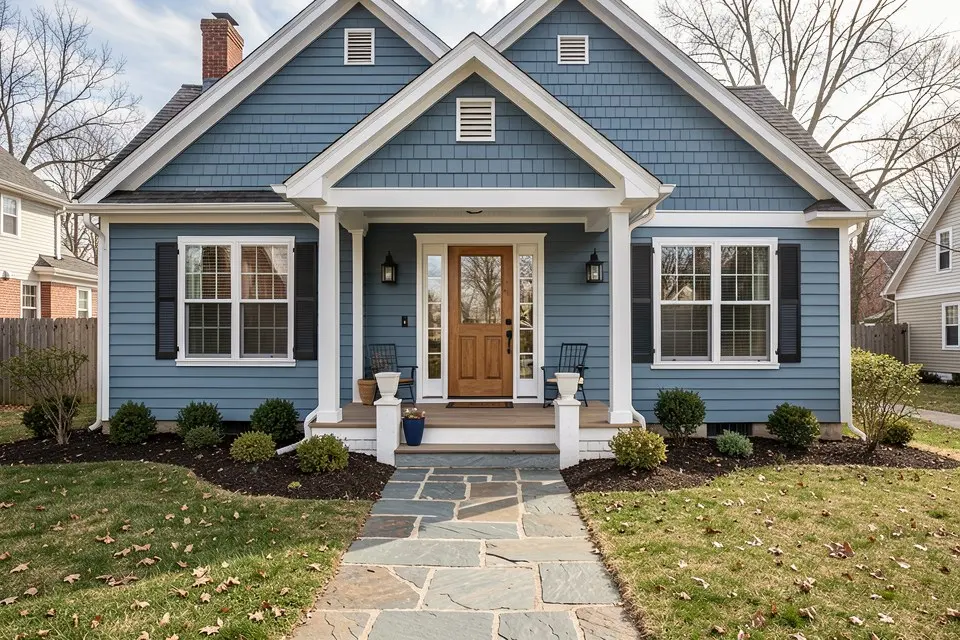
Siding decisions go wrong when the material or the pattern gets chosen independently of the house’s actual shape, a horizontal lap pattern that would suit a simple rectangular colonial ends up fighting a house with multiple gables and a mix of rooflines. Match the siding style to the architecture first, then choose the material within that constraint.
Matching pattern to shape
Simple, boxy house forms (colonials, most farmhouses, many mid-century ranch homes) suit horizontal lap siding, which is also the most widely available and cheapest to install. Houses with more complex rooflines, multiple gables, dormers, or a mix of single and double-story sections benefit from mixing patterns to break up the mass, typically horizontal lap on the main body with vertical board-and-batten on a gable end or a covered porch surface. This isn’t just aesthetic preference: on a visually busy roofline, uniform horizontal siding across every surface can make the house look flatter and more chaotic than intentionally varying the pattern in two or three carefully chosen spots.
If you haven’t settled on the exterior paint color yet, make that decision alongside the siding choice rather than after it, since certain siding materials (particularly natural wood and some fiber cement finishes) constrain your color options; see our exterior paint color guide for how the two decisions interact.
Material comparison
| Material | Cost per m² (installed) | Lifespan | Maintenance |
|---|---|---|---|
| Vinyl | €40 – €80 | 20 – 40 years | Occasional wash, no repainting |
| Fiber cement | €70 – €120 | 30 – 50 years | Repaint every 10-15 years |
| Wood | €60 – €150 | 20 – 30 years | Repaint or reseal every 3-7 years |
| Metal (steel/aluminum) | €80 – €160 | 40 – 60 years | Minimal, occasional touch-up |
| Stucco | €50 – €100 | 25 – 50 years | Recoat every 10-20 years |
Vinyl remains the default choice for cost-conscious full replacements, particularly for rental properties and homes selling in a mid-range market. Fiber cement has become the more common upgrade choice for owner-occupied homes because it holds paint better and resists impact damage without the ongoing maintenance burden of real wood.
When to repair versus replace
Full siding replacement is a five-figure project on most homes, so it’s worth being precise about whether you actually need it. Localized damage, cracked panels, isolated rot, or a small area affected by a leak, can usually be repaired section by section without replacing the whole exterior, provided the siding material is still in production or a close match is available. Full replacement makes more sense when damage is widespread, when the existing material has reached the end of its practical lifespan across the whole house, or when you’re changing the house’s overall look ahead of a sale and a full refresh reads as more consistent than patched repairs. Either way it’s contractor work; the DIY-versus-contractor guide explains why cladding sits firmly on the hire side.
If you’re deciding this ahead of a sale specifically, weigh it against the return: siding replacement is a large investment that buyers notice but don’t always fully recoup in sale price, whereas smaller curb appeal fixes often deliver better return per euro spent. See our curb appeal ideas guide for how siding ranks against cheaper options like paint and landscaping.
Color and texture considerations
Beyond material, siding comes in a range of textures, smooth, wood-grain embossed, shiplap-style, that affect how the color reads once installed. A wood-grain texture in a dark color reads warmer and less flat than the same color in a smooth finish, which matters if you’re trying to avoid a stark, uninviting look on a large expanse of siding. Lighter colors show less texture detail from a distance but hide dirt and staining less well over time than mid-tone colors do.
Siding color should be chosen alongside the exterior paint color and the roof color, since all three read as one composition from the street. The front door colour is the fourth element, and the only one cheap enough to change on a whim.
Budgeting a partial versus full project
| Scope | Typical cost |
|---|---|
| Repair a damaged section (up to 10m²) | €300 – €900 |
| Reside one elevation (front only) | €2,000 – €6,000 |
| Full house residing, average size | €8,000 – €25,000+ |
A front-elevation-only residing job is a reasonable middle option for sellers who want the street-facing view refreshed without funding a full exterior overhaul, particularly if the other elevations are in acceptable condition and mostly hidden from view. Run the exterior checklist before selling first so the residing lands alongside the cheaper fixes.
Try it yourself
Homie lets you use Exterior Redesign to preview different siding materials, patterns, and colors directly on a photo of your house, so you can compare a horizontal lap versus a mixed board-and-batten look on your actual roofline before requesting a single contractor quote.