Exterior paint colors fail for one of two reasons: they were chosen from a tiny chip under indoor light, or they ignored the roof, the neighborhood, and the amount of direct sun the house actually gets. Fix both of those before you fix the color itself, and you avoid the most common and most expensive repaint mistake.
Start with what you can’t change
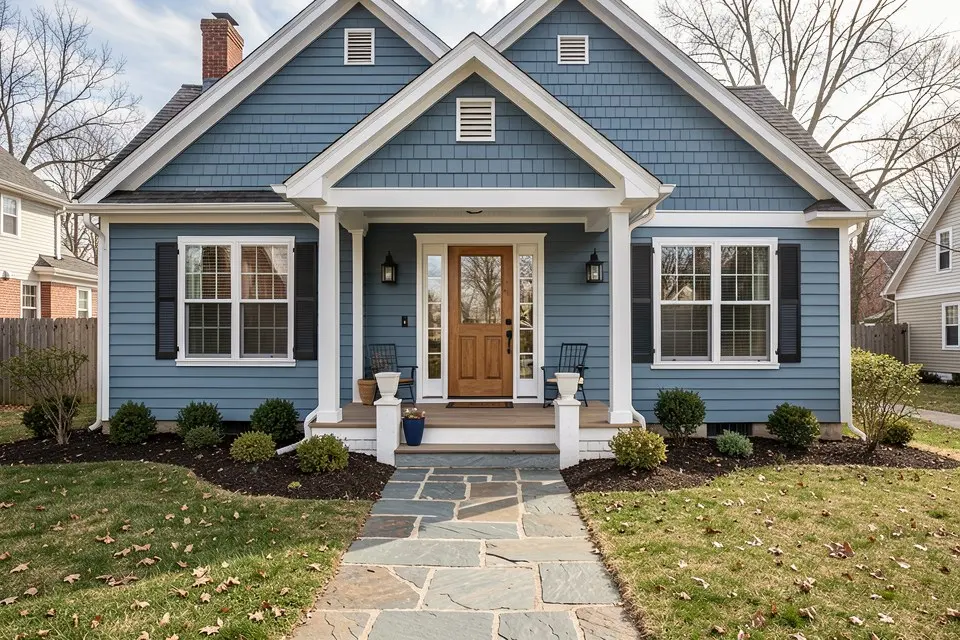
The roof color, any brick or stone that won’t be painted, and the general character of the street are all fixed points, the same way a room’s window position is a fixed point for an interior redesign. Pick your palette around them rather than in isolation. A dark charcoal roof pairs naturally with cooler body colors (soft grays, muted blues, off-whites), while a warm terracotta or brown roof pairs better with warmer neutrals (creams, warm grays, muted greens). Fighting this pairing, cool body paint against a warm roof, is the single most common reason an otherwise well-chosen color reads as “off” once it’s actually on the house.
If your roof itself is due for a refresh or you’re deciding on color there too, handle that decision first since it constrains everything else; see our roof color guide for how to choose one that ages well.
The three-color system
Professional exterior painters generally work with three colors, not one:
- Body color, covering the majority of the siding or stucco. This is where restraint pays off; a body color too far from neutral dates faster and limits resale appeal.
- Trim color, for window frames, fascia, and corner boards. Usually white or a color a few shades lighter or darker than the body, providing definition without competing for attention.
- Accent color, reserved for the front door and sometimes shutters. This is where you can commit to something bolder, since it’s a small enough area that a strong color reads as intentional rather than overwhelming. See our front door color guide for accent choices that work across different house styles.
Testing before committing
Never choose from a paint chip alone. Buy sample pots (typically €5-15 each) and paint a patch at least 1m by 1m directly on the house, in a spot visible from the street, and view it at three different times of day: morning, midday, and early evening. Exterior colors shift dramatically with changing light in a way interior colors, viewed mostly under consistent artificial light, don’t. A color that looks perfectly neutral at noon can read distinctly blue-gray or green-gray at dusk. That shift is the undertone showing; how to choose paint colours by their undertones explains how to spot it on the chip before it’s on the wall.
If you want to preview a full palette across the entire facade before buying any sample pots at all, a photo-based color tool removes even the sample-patch step; how to generate a paint colour palette from a photo walks through that workflow, and the Exterior Redesign and Color Palette tools are mentioned below.
What it costs
| Job | Cost range |
|---|---|
| DIY full exterior repaint, average house | €800 – €2,000 (materials only) |
| Professional exterior repaint, average house | €3,000 – €8,000 |
| Trim-only repaint | €500 – €1,500 |
| Front door repaint only | €40 – €150 DIY |
Full repaints are a multi-year commitment, so the color decision deserves the testing step above even though it adds a few days to the timeline. A rushed color choice that needs revisiting in year two costs far more than the extra week of sampling would have.
Matching color to house style
Different architectural styles read best with different palettes. A mid-century home suits warm neutrals with a bold accent door; a farmhouse suits classic white or soft gray body with black or navy trim; a coastal-style home suits soft blues, sandy neutrals, and crisp white trim. If you’re renovating with a specific style target in mind for the whole property, cross-reference against our siding ideas guide, since siding material and color decisions are closely linked and best made together rather than sequentially.
Selling soon? Play it safer
If the paint job is happening ahead of a sale rather than for your own long-term enjoyment, lean toward broadly appealing neutrals for the body color even if you’d personally choose something bolder. Buyers project their own taste onto a house more easily when the exterior doesn’t already make a strong statement, and a neutral, well-maintained exterior consistently performs better for curb appeal purposes than a bold one that only some buyers will love. See our curb appeal ideas guide for how paint color fits into the broader pre-sale exterior priority list, and run the exterior checklist before selling so the paint lands in the same week as the rest of the pre-listing work.
Try it yourself
Homie lets you photograph your house and preview exterior paint colors directly on it using Exterior Redesign and generate a matching Color Palette, so you can see the body, trim, and door combination on your actual facade before buying a single sample pot.