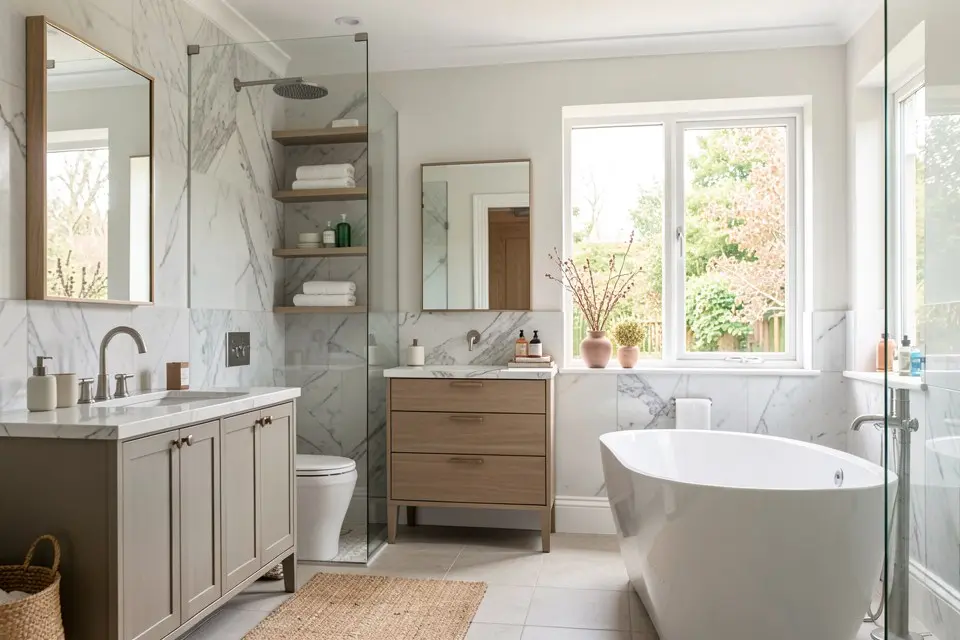
Bathrooms get treated as all-or-nothing renovation projects because the tile is expensive to change, but the tile is rarely the problem. It’s usually the vanity, the mirror, and the lighting doing the damage.
Work around the tile, not against it
If your bathroom has white, cream, grey, or another neutral tile in reasonable condition, you’re in a good position: nearly any updated fixture set will look intentional against it. The redesign budget then goes entirely toward:
- Vanity. A new vanity top and cabinet, or simply repainting the existing cabinet and swapping the faucet, changes the room’s focal point more than any other single item.
- Mirror. Builder-grade flat mirrors are the most common thing dragging a bathroom down. An LED-edge or backlit mirror in a size that matches the vanity width looks like a renovation for a fraction of the cost.
- Lighting. Vanity lighting should flank the mirror at eye level, not sit above it, which casts shadows under the eyes. Two sconces at roughly 150 cm height on either side of the mirror solve this.
- Hardware and fixtures. Faucet, towel bar, and cabinet pulls in a matched finish read as a cohesive design decision even when nothing else changed.
- Paint or wallpaper on non-tiled walls. Most bathrooms have at least one wall above the tile line that’s just painted drywall, and that’s free real estate for colour or a moisture-rated wallpaper. Pick the shade against the tile’s undertone, as how to read paint undertones explains, because a warm white next to cool grey tile reads yellow.
If you rent, most of these swaps are reversible; rental-friendly apartment upgrades lists which fixtures you can take with you when you move.
If the tile itself genuinely has to go, that’s a different and more expensive project, closer in scope to what our bathroom section of the renovation cost estimate guide covers.
Lighting and a repaint do most of the work in a bathroom — what it costs to paint a room has the numbers for a small, steamy space, and the renovation checklist is worth a read if you’re tempted to go further than paint.
What it costs
| Change | Range |
|---|---|
| New vanity (cabinet + top, mid-range) | €400 – €1,200 |
| Repaint existing vanity cabinet | €80 – €200 |
| LED mirror | €150 – €500 |
| Vanity sconces (pair) | €80 – €250 |
| Faucet + hardware swap | €150 – €400 |
| Full retile (small bathroom) | €2,500 – €6,000 |
A worked example
A 2 × 2.5 m bathroom with white subway tile in good condition, a dated oak vanity, a flat mirror, and a single ceiling light causing harsh downward shadows.
The subway tile stays entirely untouched, since it’s neutral and in good shape. The oak vanity gets painted a deep navy and fitted with a new white quartz-look top and brushed nickel faucet. The flat mirror is replaced with a backlit LED mirror sized to the new vanity width, and two nickel sconces go in at eye level flanking it, wired into the existing ceiling circuit by an electrician, one of the jobs the DIY-versus-contractor comparison says not to do yourself. A towel bar and robe hook in matching nickel finish off the hardware.
Total spend: roughly €1,600, with the tile, tub, and toilet completely untouched. The bathroom reads as fully renovated because the vanity wall, the part you actually look at, changed entirely.
Try it on your own room
Photograph your bathroom straight-on toward the vanity wall, then run Room Redesign in Homie to test a new vanity colour, mirror style, and wall colour before you buy anything. If your bathroom is small enough that every choice feels riskier, our staging small rooms guide has useful principles on making a compact room read larger, even outside a selling context.