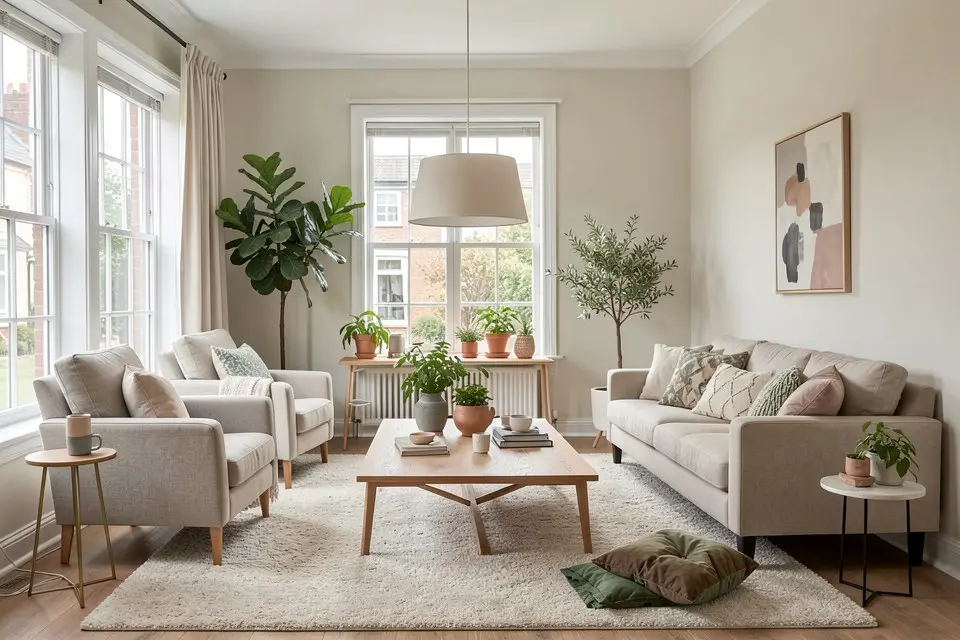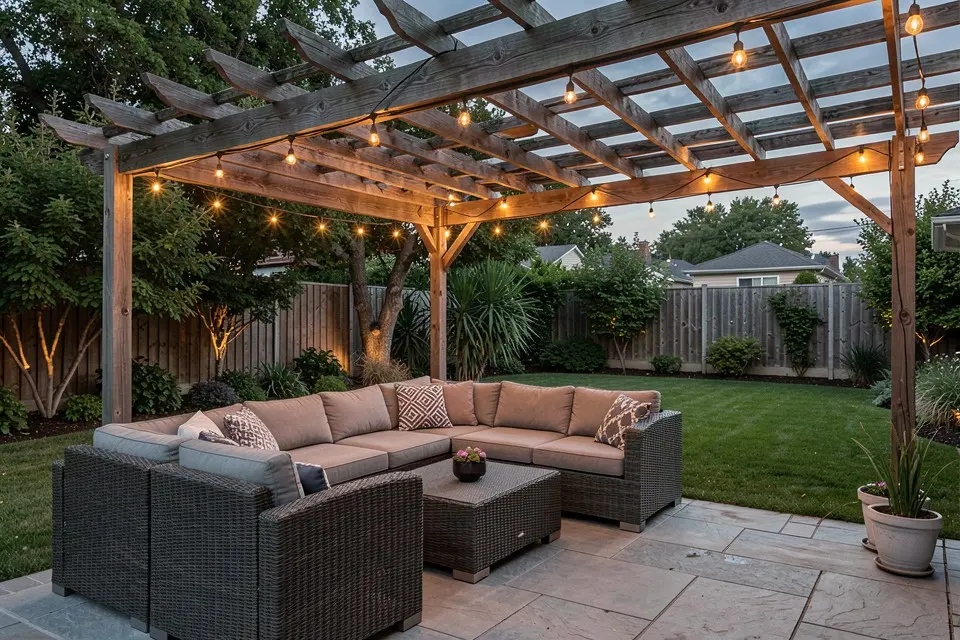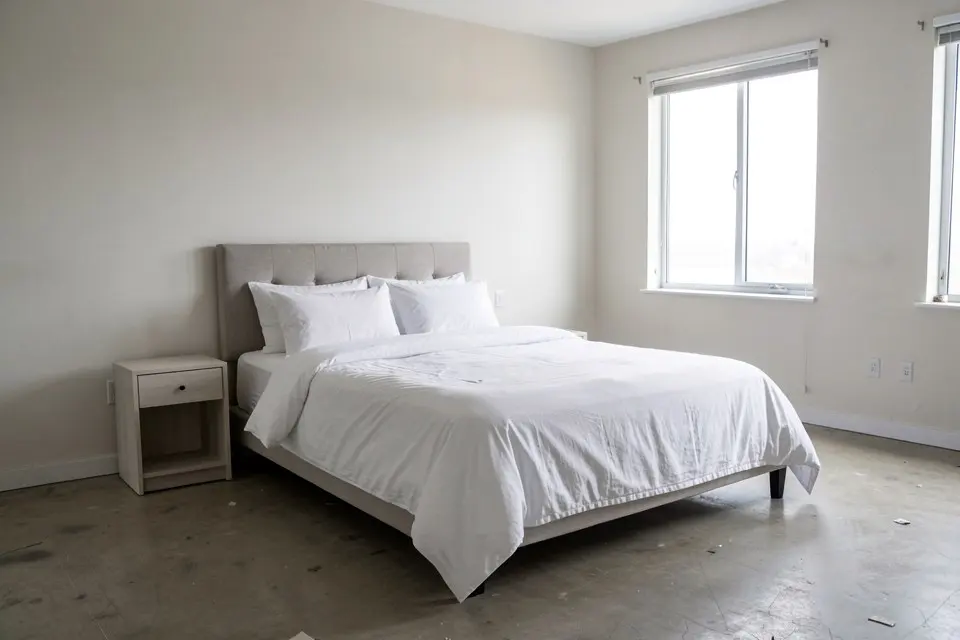
Physical staging sells better in person, virtual staging sells just as well in photos, and for most listings today the majority of buyer interest is generated online before anyone walks through the door. That’s the whole comparison in one sentence; everything below is the detail behind why.
What each one actually is
Physical staging means renting real furniture, having a crew deliver and arrange it, and paying a monthly rate until the home sells or the rental period ends. Virtual staging means taking photos of the empty room and digitally adding furniture to the images, at a fixed one-time cost per photo (the virtual staging cost guide has the per-image ranges). They solve the same underlying problem, that an empty room reads smaller and less inviting than a furnished one, but through completely different mechanics.
Where physical staging wins
Physical staging wins the moment a real person walks through the door. Standing in an empty living room, buyers struggle to picture where a sofa goes or whether their dining table fits; standing in a furnished one, they don’t have to imagine anything. If your property gets a high volume of in-person showings before it goes under offer, and especially in competitive markets where buyers view multiple homes back to back in one afternoon, a physically staged home has a real edge that no photo, staged or not, can replicate.
It also wins for the two or three rooms that make first impressions: the entry, the living room, and the primary bedroom. Staging companies will often tell you to skip the rest of the house and put the whole budget into those three, and that’s sound advice if you’re staging at all. Compact secondary rooms are a different problem; staging small rooms for listings covers where virtual wins there.
Where virtual staging wins
Virtual staging wins on cost, speed, and scale. You can stage every room in the house, including secondary bedrooms and the home office that would never justify a rental furniture budget, for the price of physically staging a single room. It also produces the staged photos in hours instead of the week or more it takes to schedule a staging crew, order furniture, and get it installed before your photographer arrives.
For homes selling in a market where the listing does most of its work online, meaning buyers filter and shortlist properties by photo before requesting a showing, virtual staging captures nearly all of the engagement benefit of physical staging at a fraction of the spend. If the property will sit empty between listing and closing, as with staging an empty house waiting on a slow buyer pool, virtual staging removes the ongoing rental cost entirely.
A side-by-side
| Factor | Physical staging | Virtual staging |
|---|---|---|
| Cost (per room) | €300 – €900/month | €15 – €50 one-time |
| Setup time | 3 – 7 days | Minutes to hours |
| Works for in-person showings | Yes | No |
| Works for online listing photos | Yes | Yes |
| Scales to every room affordably | No | Yes |
| Ongoing cost while listed | Yes, monthly | No |
How to decide for your listing
Ask three questions. First, how many in-person showings will happen before an offer, versus how much of the interest will come from the online listing alone? A slow, high-showing-volume market leans physical; a fast-moving market where offers come in from photos alone leans virtual. Second, what’s the actual condition of the space? If the room has good bones and just needs furniture to read as finished, either method works; if the room needs a paint refresh or has clutter that needs removing first, deal with that before staging of any kind, using tips for clearing clutter from photos as a starting point. Third, what’s the budget, and is it better spent on staging or on the exterior? A house with weak curb appeal loses buyers before they open the listing at all; see our curb appeal guide if that’s the bigger gap.
The hybrid approach most agents actually use
In practice, most experienced agents don’t pick one exclusively. They physically stage the rooms buyers will walk through and photograph the rest virtually, splitting the budget where each method actually earns its cost. The home staging checklist for sellers sequences that split room by room. This also solves the awkward case of an oversized house where physically staging every room would run into five figures for no measurable extra return.
If you go this route, keep the furniture style consistent between the physically staged rooms and the virtually staged ones. A photorealistic virtual mid-century sofa in the office next to an actual farmhouse-style physical sofa in the living room reads as mismatched even if a buyer can’t say exactly why.
Try it yourself
Homie generates photorealistic Virtual Staging for any room from a single photo, so you can cover every corner of the house that doesn’t justify a rental furniture line item, and reserve the physical staging budget for the rooms that actually get walked through.