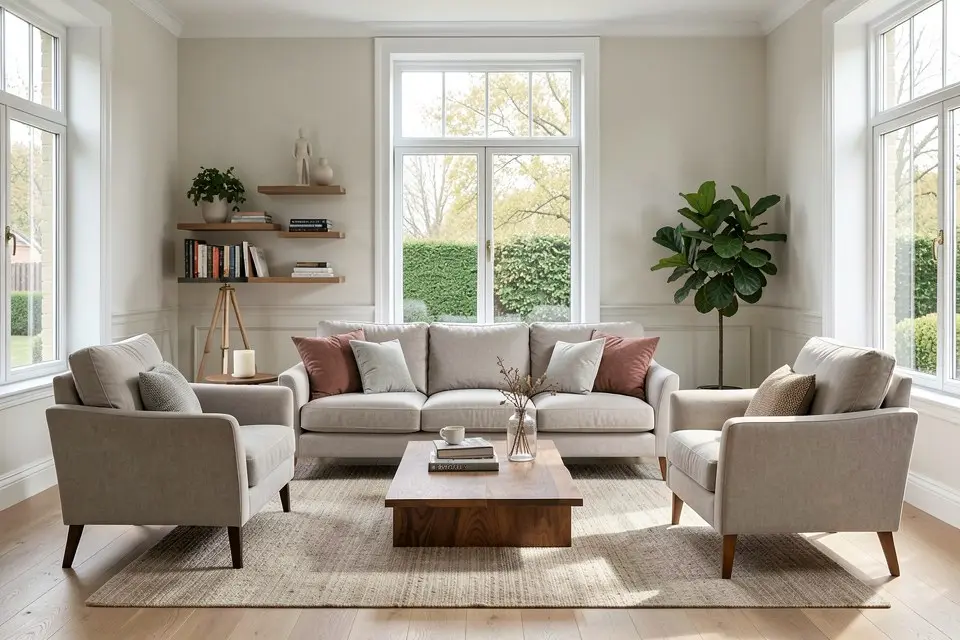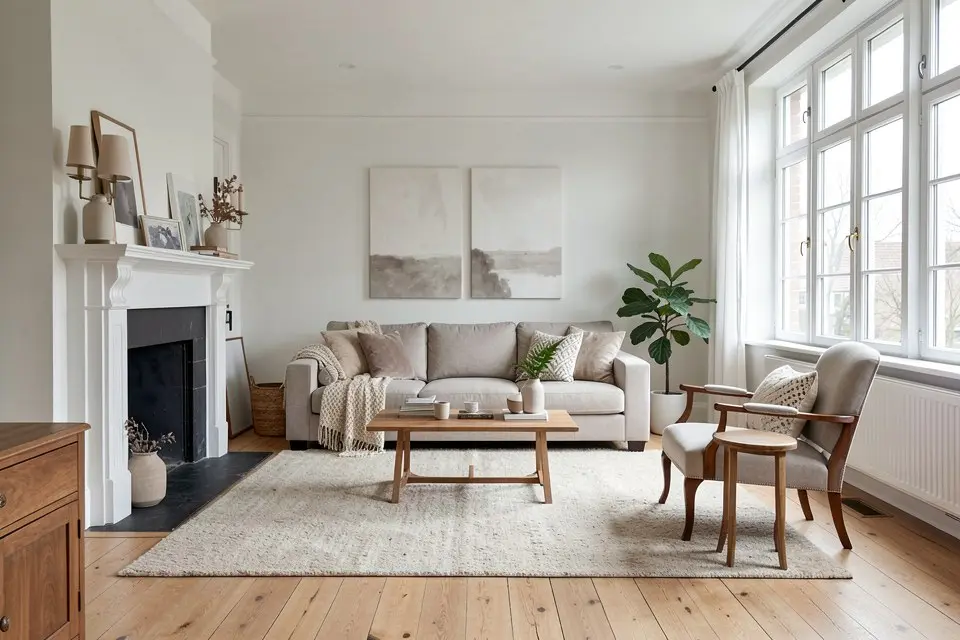
An empty house doesn’t need furniture to sell well online, it needs furniture in the photos, and those are two different and very differently priced problems. If the property will actually be shown to buyers in person, a small physical budget for the entry and living room covers most of the impression gap; everything else can be virtual.
Why empty listings underperform
Buyers scrolling a listing site can’t judge scale from bare walls and bare floor. A photo of an empty 4m x 4m bedroom and a photo of an empty 3m x 3m bedroom look nearly identical without a bed or a dresser to establish scale, so buyers either assume the smaller size or scroll past without engaging at all. Furniture in the photo isn’t decoration, it’s the only scale reference a buyer has.
This matters more for vacant properties than for owner-occupied ones, since vacant listings tend to sit longer and lose momentum the longer they’re on the market unstaged. If the house has been empty for a while already, pair the staging effort with a check of the exterior checklist to run before you list, since an empty house also tends to accumulate the kind of neglected curb appeal that costs showings before buyers even get inside.
The plan: virtual staging for photos, minimal physical touches for showings
Split the work into two tracks that don’t need to happen at the same time or cost.
For the listing photos, virtually stage every room that appears in the gallery. This includes the living room, all bedrooms, the dining area, and the home office if there is one. Kitchens and bathrooms generally don’t need furniture staging but do benefit from small digital styling touches like towels and counter decor if the tool supports it. Since virtual staging is priced per photo and not per square metre, there’s no cost reason to skip any room. The virtual staging cost guide has the per-photo ranges by provider type.
For in-person showings, you need a smaller, cheaper set of physical touches, not full furniture:
- Rugs in the living room and primary bedroom. A rug alone makes an empty room feel intentional rather than abandoned, and a 200x300 rug runs €80–150.
- One floor lamp per main room. Overhead lighting alone in an empty room throws hard shadows and feels institutional; a warm floor lamp softens it for under €50.
- Bathroom textiles. Fresh towels, a bath mat, and a bar of soap cost under €30 total and make bathrooms feel used rather than derelict.
- A bowl on the kitchen counter. Fruit, or even just a ceramic bowl, breaks up the emptiness of bare countertops for the cost of what’s already in your kitchen.
That full physical list runs under €300 for the whole house, well below even a single room of rental furniture, and covers the sensory gaps that photos alone don’t fix, like the echo of an empty room or the coldness of bare countertops. The home staging checklist for sellers turns these touches into a walk-through order for showing day.
What to skip
Don’t rent a full furniture package for a house that’s going to sell primarily off online interest. It’s the single most expensive line item on this list and, per room, delivers the least additional benefit over virtual staging in the photos plus the physical touches above. If you’re unsure whether your market leans toward in-person or online-driven sales, our comparison of virtual staging against physical staging walks through how to make that call.
Handling small or awkward empty rooms
Small bedrooms and box rooms are the hardest to stage empty, since buyers assume the worst about a room’s usable size when there’s nothing in it to prove otherwise. For these, prioritize the virtual staging pass and choose furniture at true-to-scale dimensions. Our guide to staging small rooms for listings covers which furniture pieces and layouts read as spacious rather than cramped when a room is genuinely tight.
A worked cost example
For a 4-bedroom empty house going to market:
| Item | Cost |
|---|---|
| Virtual staging, 6 rooms at €30 avg | €180 |
| 2 rugs | €200 |
| 4 floor lamps | €160 |
| Bathroom textiles, 2 bathrooms | €60 |
| Kitchen counter styling | €20 |
| Total | €620 |
Compare that to renting furniture for even three rooms for a single month, which typically runs €900–2,700 depending on the market, and the gap is obvious for a seller trying to keep selling costs down.
Try it yourself
Homie lets you upload a photo of every empty room in the house and generate photorealistic Virtual Staging in minutes, so the listing photos do the work while your physical staging budget stays focused on what buyers will actually walk through.