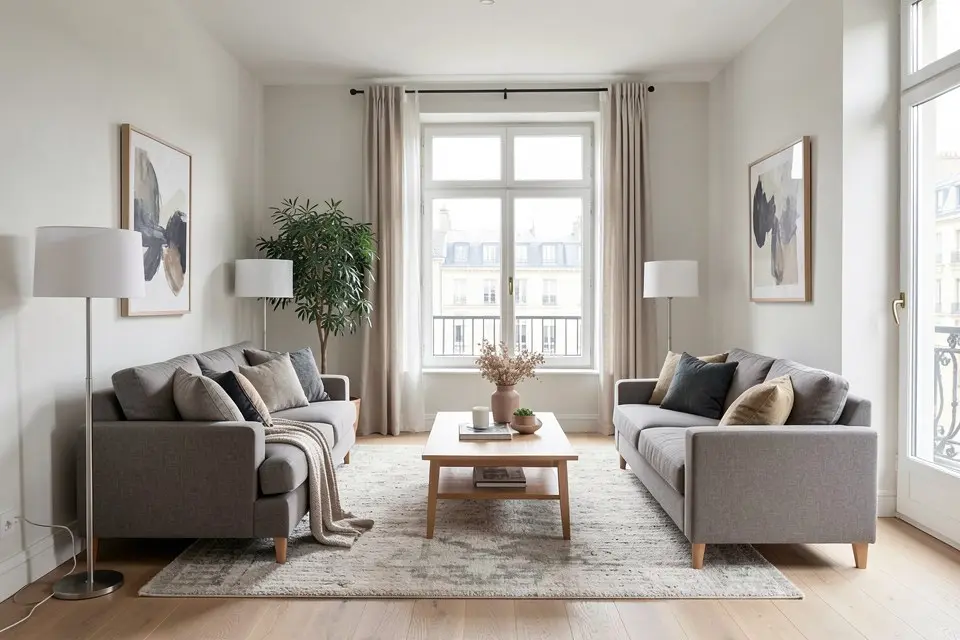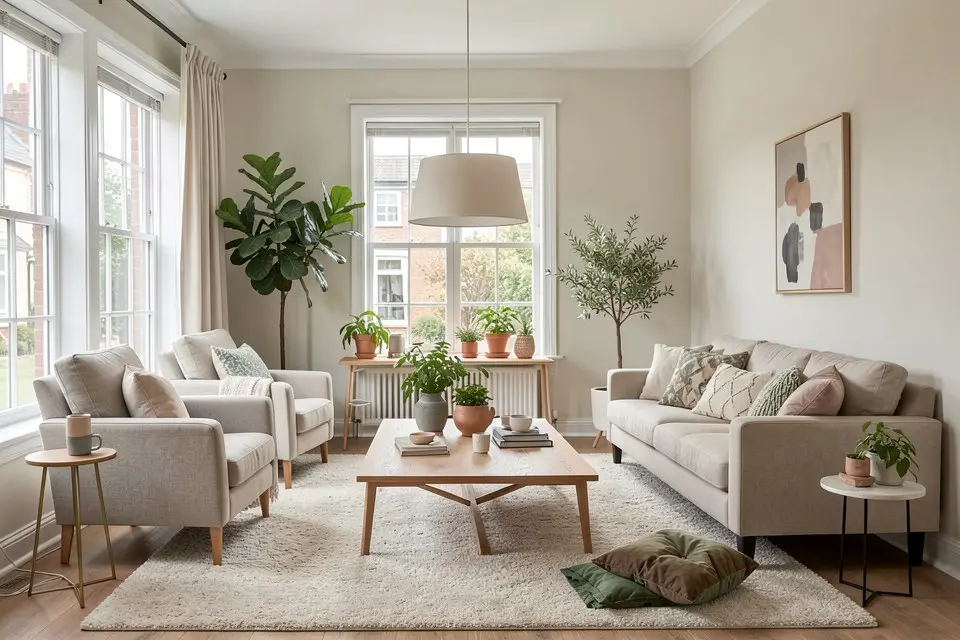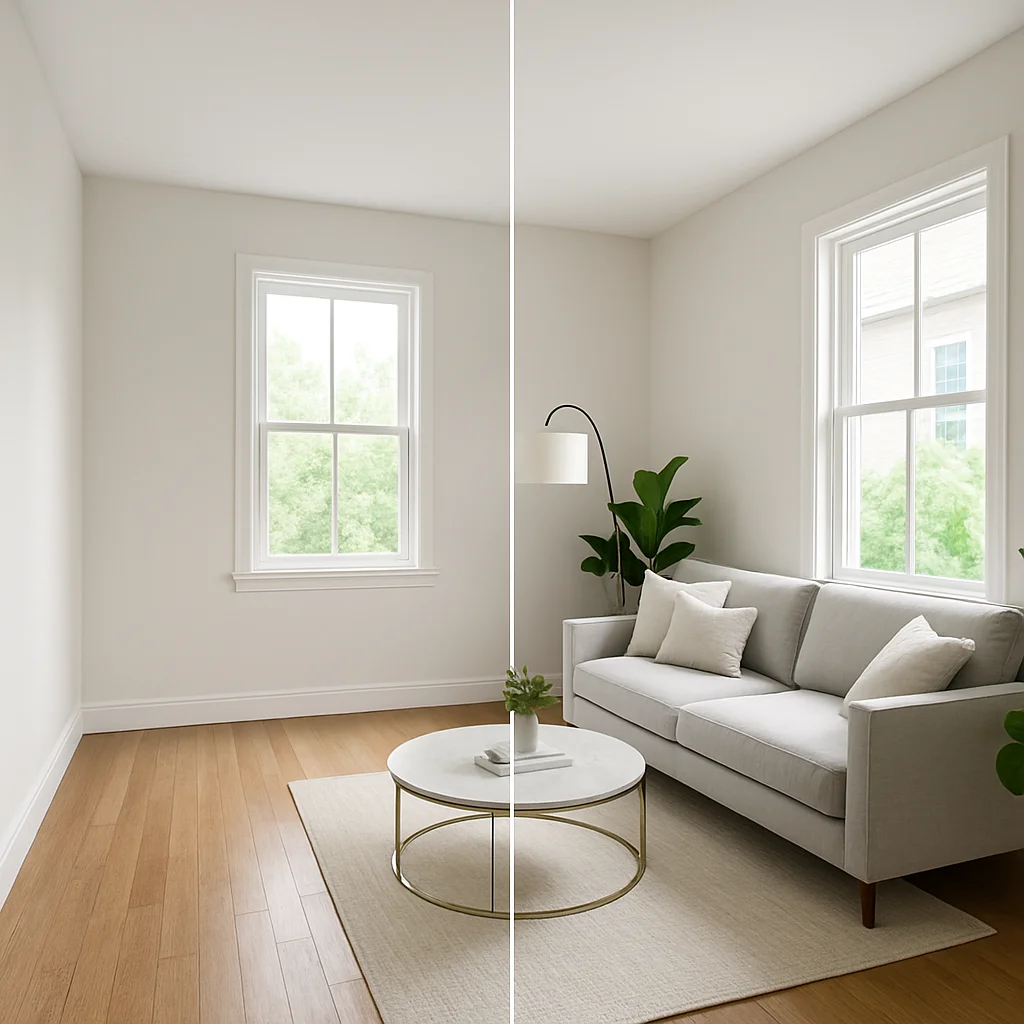
A short-term rental competes in a grid of thumbnails. Guests decide in a second whether to click, and then decide from the photos whether to book. That makes Airbnb interior design different from designing your own home: every room has to photograph well, survive a steady stream of guests and be easy to reset between stays. This guide covers how to plan a rental that does all three.
Design for the photo first
Your cover photo does the heaviest lifting in search results. Decide early which room and which angle will be the hero shot, and design that view deliberately.
- Pick one strong focal point: a statement headboard, a colorful sofa, a large piece of art or a view.
- Keep the background calm so the focal point reads in a small thumbnail.
- Make sure the room reads clearly as what it is: a bed, a sofa, a dining table.
The listing photo tips apply to rentals as much as to homes for sale.
Choose a style that fits the place
Guests often book a location for a feeling, so match the design to it:
- Beach: light, breezy and relaxed; see the coastal style guide.
- Mountains or lake: warm wood, texture and a modern cabin feel.
- City: clean and warm-minimalist, with good lighting and a proper workspace; the minimalist interior design guide is a good base.
- Historic or rural: lean into the setting with vintage pieces or a farmhouse touch.
Consistency matters more than the specific style. A listing where every room feels like the same place looks more professional.
Furniture that survives guests
Pick durable materials
- Performance fabrics or leather on sofas and chairs; avoid delicate linen and velvet in light colors.
- Solid wood or metal frames rather than particleboard.
- Washable slipcovers and removable cushion covers.
- Indoor-outdoor rugs in high-traffic areas.
Beds are the priority
Guests judge a rental on sleep. Buy good mattresses, use mattress protectors on every bed, and keep two sets of linens per bed so you can turn the room over quickly. White bedding looks crisp in photos and can be bleached.
Keep it simple to clean
Fewer small decorative objects means faster turnovers and fewer broken items. Closed storage for spare linens and supplies keeps the space looking tidy.
The amenities guests look for
Photos sell the stay, but reviews come from comfort and convenience. Commonly expected items include:
- fast Wi-Fi and a clear place to work with an outlet nearby,
- blackout curtains in bedrooms,
- a bedside lamp and outlet on each side of every bed,
- a well-equipped kitchen with basic cookware, knives that cut and a coffee maker,
- enough hooks and hangers, plus a luggage rack.
The guest bedroom ideas guide lists small details that make a big difference for visitors.
Make small spaces work harder
Many rentals are studios or one-bedrooms. A sofa bed can add sleeping capacity, but only buy a good one; a bad sofa bed produces bad reviews. Use mirrors, light walls and furniture on legs to make rooms feel larger. The staging small rooms guide and the studio apartment layout ideas cover space-saving layouts.
Plan the design with AI before you buy
Furnishing a rental is a big upfront cost, so it helps to see the result first.
- Photograph each empty room in daylight.
- Use Homie’s virtual staging tool to furnish them in two or three different styles.
- Compare the versions as thumbnails — that is how guests will first see them.
- Pick the style, then use Shop the Look (a Pro feature) to find similar pieces.
- Use the color palette tool to pull paint and accent colors from the render.
If the rental is already furnished but dated, the room redesign tool shows how a refresh could look.
An important point: use virtual staging to plan, not to market. The photos on your listing should show the real, furnished space guests will find when they arrive. Mismatched photos lead to unhappy guests and poor reviews.
Budget planning
Break the budget down by room and put the most money into beds, sofas and the hero-shot room. Cheaper decor can come later. The furniture budget planning guide and the cost to furnish an apartment guide help estimate totals. Homie Pro costs $3.99 per week, $8.99 per month or $49.99 per year and includes up to six designs a day, which is usually enough to plan a whole rental in a session or two.
Room-by-room checklist
Living area
Seating for at least as many guests as the listing sleeps, a coffee table with rounded corners, a TV or a clear spot for a laptop to stream, and a lamp at each end of the sofa. Keep decorative objects few and heavy enough not to tip over.
Kitchen
Guests notice what is missing more than what is there. Stock a sharp chef’s knife, a cutting board, one large and one small pan, a pot, a baking sheet, enough plates and glasses for twice the listed capacity, and basic oil, salt and pepper. Label cabinets if the layout is not obvious.
Bedrooms
A good mattress, two pillows per guest in two firmness levels, blackout curtains, a mirror, hooks and hangers, and an empty drawer. A bench or luggage rack keeps suitcases off the bed.
Bathroom
Plenty of towels, a hook for each guest, a shelf near the sink for toiletries and good light at the mirror. White towels look clean in photos and are easy to launder together.
Refresh on a schedule
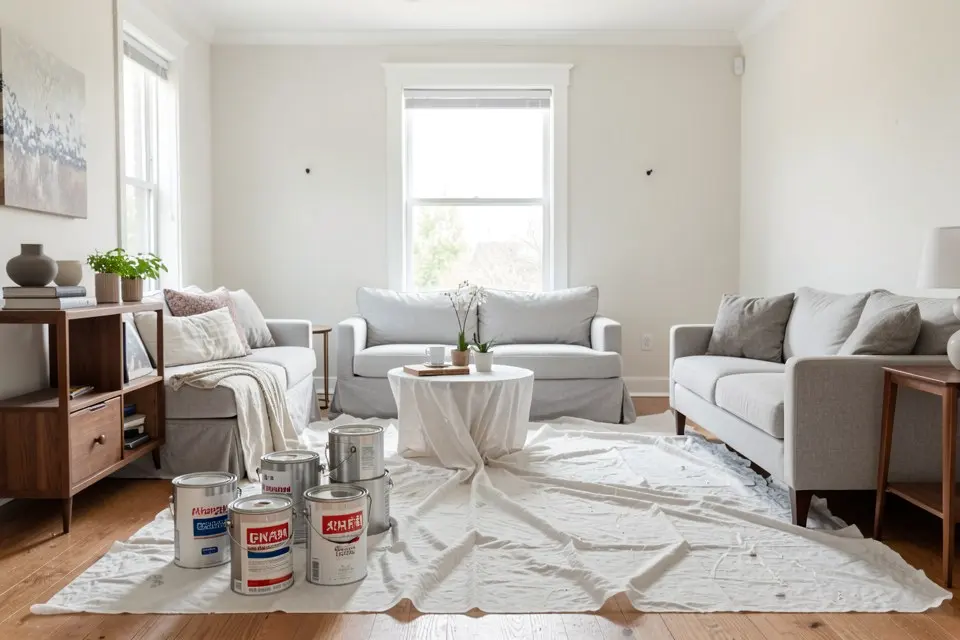
Rentals wear faster than homes. Walk through the property every few months as if you were a guest: check for stained cushions, scuffed walls, flickering bulbs and chipped dishes. Keep leftover paint labeled by room so touch-ups are quick. Plan a larger refresh every few years; re-staging a room virtually before you buy anything helps you update the look without replacing everything at once.
Dimensions guests notice
Guests rarely measure anything, but they feel cramped rooms instantly. Plan around these general guidelines:
- Bedroom walkways: at least 24 inches on both sides of the bed and at the foot.
- Queen vs king: a queen needs a room of roughly 10 by 10 feet; a king is more comfortable in 12 by 12 feet or larger.
- Luggage space: leave a clear spot about 3 by 2 feet near the bed or closet for an open suitcase, or add a folding luggage rack.
- Dining: allow 24 inches of table length per guest, and match seats to the listing’s maximum occupancy.
- Sofa bed: check the opened length, often around 90 inches, and make sure a walkway still exists around it.
- Bathroom hooks and towel bars: provide one hook or bar per guest.
Durable materials compared
| Area | Good choice | Avoid |
|---|---|---|
| Sofa | Performance fabric, removable covers | Light linen, delicate velvet |
| Floors | Luxury vinyl plank, tile | Wall-to-wall light carpet |
| Bedding | White cotton you can bleach | Dark or patterned sets that fade |
| Tables | Sealed wood, laminate, metal | Unsealed wood that marks from cups |
| Walls | Washable matte or eggshell paint | Flat paint that scuffs easily |
Keep a record of paint colors and bedding models so you can replace items quickly between stays.
Mistakes to avoid
- Decorating for yourself. Strong personal taste can put off guests who scroll past quickly.
- Too many small decor items. They get broken, moved or taken, and they make cleaning slower.
- Poor lighting. Put a lamp by every bed and seat; guests read, work and pack in the evening.
- Ignoring storage. Guests need somewhere to put clothes and toiletries; empty drawers and a few hangers matter more than extra decor.
Try it in Homie before you furnish
- Photograph each room empty or cleared, in daylight.
- Stage empty rooms with virtual staging to compare layouts.
- Try two style directions in the room redesign tool and keep the one that photographs best as a listing hero shot.