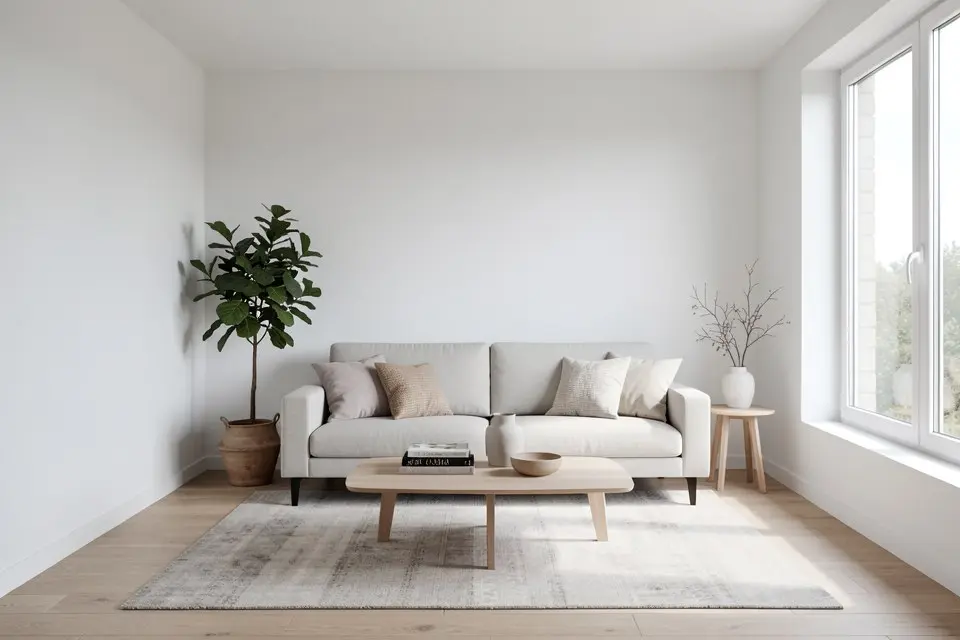
Minimalist interior design fails, and feels cold, when people remove objects but forget to add warmth back in through material and light. Empty is not the same as calm; the difference is texture.
The actual rule
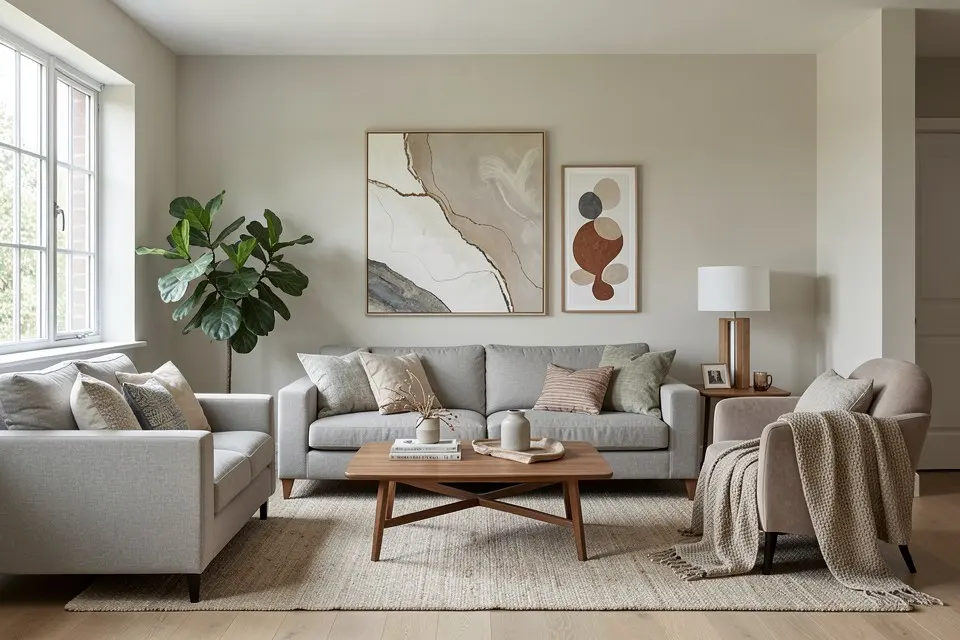
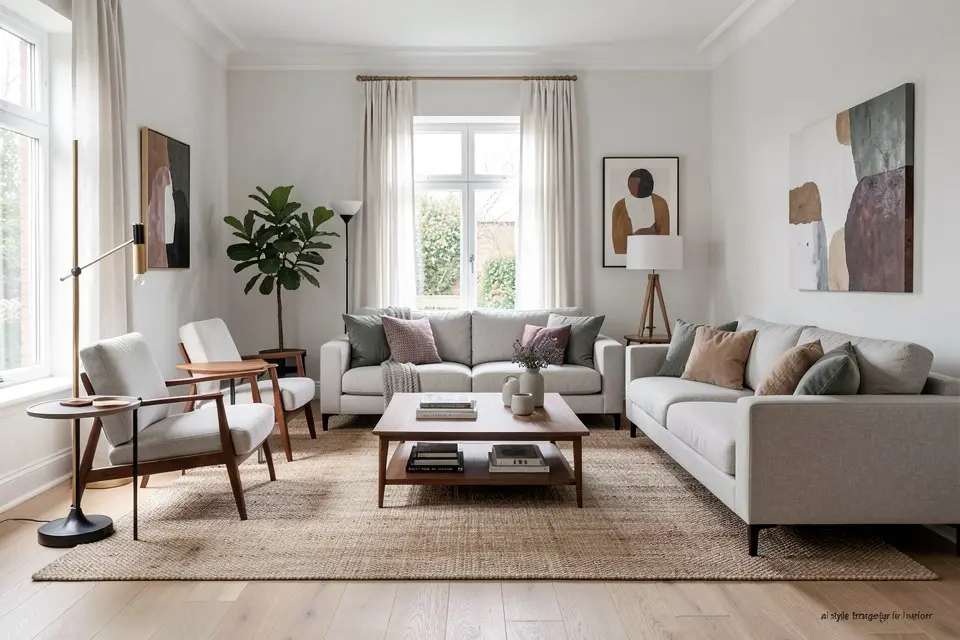
Minimalism is not “fewer things.” It’s “only things that are doing a job, in materials that feel good to touch, lit from more than one source.” A minimalist room with a wool rug, a linen sofa, warm-toned wood, and three light sources at different heights feels calm. The same room with a grey sofa, a glass table, and one bright overhead LED feels like a waiting room, even though both have roughly the same number of objects.
The four things that actually create calm
- Warm, textured materials. Wool, linen, unlacquered wood, matte ceramic. Cold minimalism uses glass, glossy lacquer, and chrome; warm minimalism uses the same restraint with tactile surfaces instead.
- Layered light, dim-able. At least three sources: ambient (ceiling, on a dimmer), task (a reading or desk lamp), and accent (a floor lamp or picture light). A single bright ceiling fixture is the single biggest reason minimalist rooms photograph well and feel bad to sit in.
- A narrow, warm palette. Two to three colours total, and none of them a stark cool white or grey. Oat, warm putty, soft clay, off-white — these read as considered rather than clinical. Telling a warm white from a cool one on the chip is the skill how to choose paint colours by undertone teaches.
- A small number of intentional objects. Not zero. One piece of art, one plant, one ceramic bowl. Minimalism with literally nothing on any surface reads as unmoved-in, not designed.
The palette
| Element | Colour |
|---|---|
| Walls | warm white, oat, or soft putty |
| Large furniture | one neutral, linen or wool upholstery |
| Wood tones | warm oak or ash, not cool grey-washed timber |
| Accent | one muted tone, used in under 10% of the room |
Where it goes wrong
The single most common failure is confusing minimalism with austerity: white walls, white sofa, grey floor, no textiles, one bright downlight. That room reads as unfinished, not restrained, because there’s no texture and no layered light to carry the eye. The fix is almost never “add more furniture.” It’s add one rug, one warm-toned lamp, and repaint the wall a half-shade warmer. That warmer, textured version is close to what Scandinavian style does by default.
The second failure is over-editing storage. Minimalist doesn’t mean visible surfaces stay empty by force; it means clutter goes somewhere closed. If you’re removing visible clutter from photos to see what a room could look like stripped back, that’s a useful diagnostic step covered in how to remove clutter from room photos before you commit to buying anything new.
Room by room
- Living room: one substantial sofa in linen or wool, a single low table, a floor lamp with a warm-temperature bulb, one piece of art.
- Bedroom: a platform or low bed, linen bedding in one tone, a single nightstand each side, no overhead light used at night, only lamps. See bedroom redesign ideas for layout specifics if the room also needs to solve for sleep.
- Home office: a single desk with closed storage beneath it, one task lamp, nothing visible on the desk surface but the essentials.
- Kitchen: handleless or simple pull cabinetry in one tone, closed storage for small appliances, one open shelf with three objects on it, not eleven.
A worked example
A 3.2 × 3.8 m bedroom currently white-on-white: white walls, white duvet, a grey rug, one bright ceiling LED, no lamps.
The walls get repainted a warm oat rather than staying stark white. The white duvet is swapped for undyed linen, which brings texture without adding a new colour. A wool rug in a soft clay tone replaces the flat grey one. Two table lamps go on either nightstand, and the ceiling light gets a warm 2700K bulb on a dimmer instead of the original cool-white LED. Total cost for this shift is usually €300 to €900: paint, bedding, one rug, two lamps, no furniture replacement.
Try it yourself
If your room is currently stark rather than calm, the fix is closer to what japandi does with its warm neutrals and two-wood contrast than to stripping further. To test the warmth-and-light adjustment on your actual room, run Style Transfer in Homie with a minimalist prompt on a photo of the space. It keeps your layout and windows fixed and shows you the warmer palette and layered lighting before you buy a single lamp.