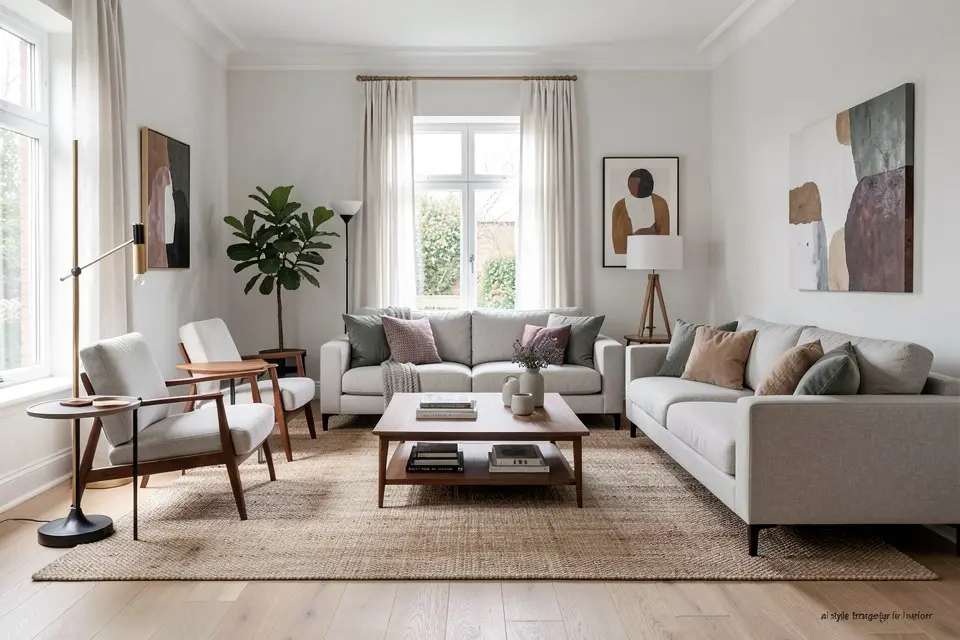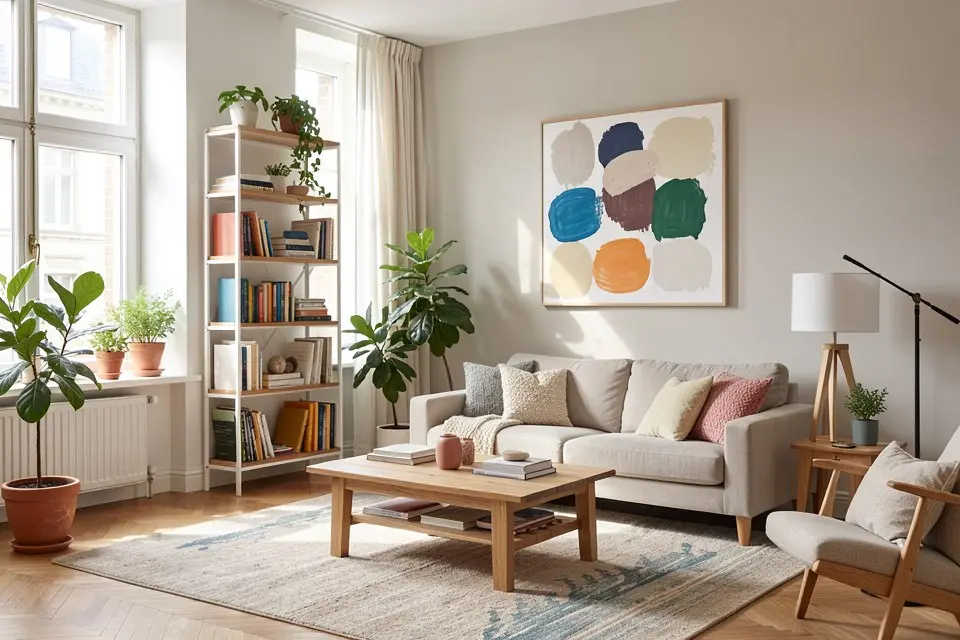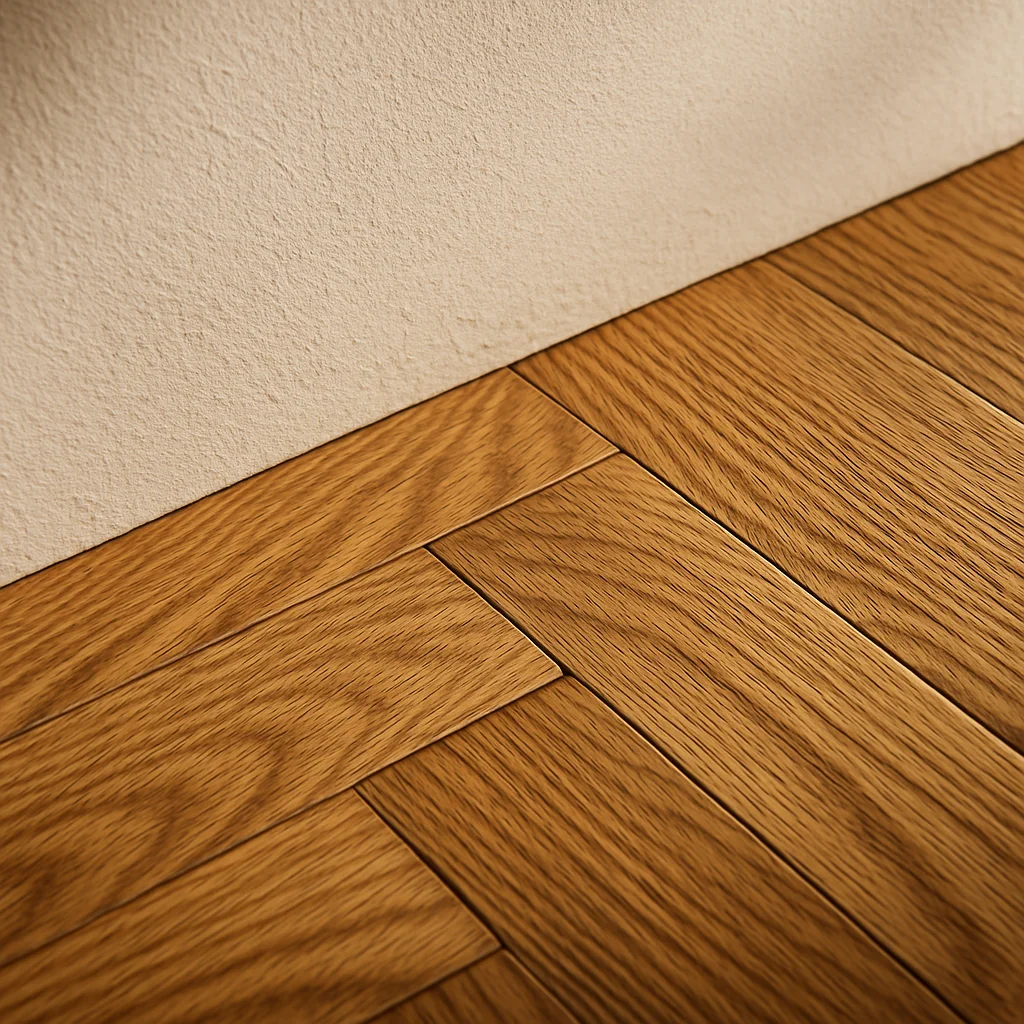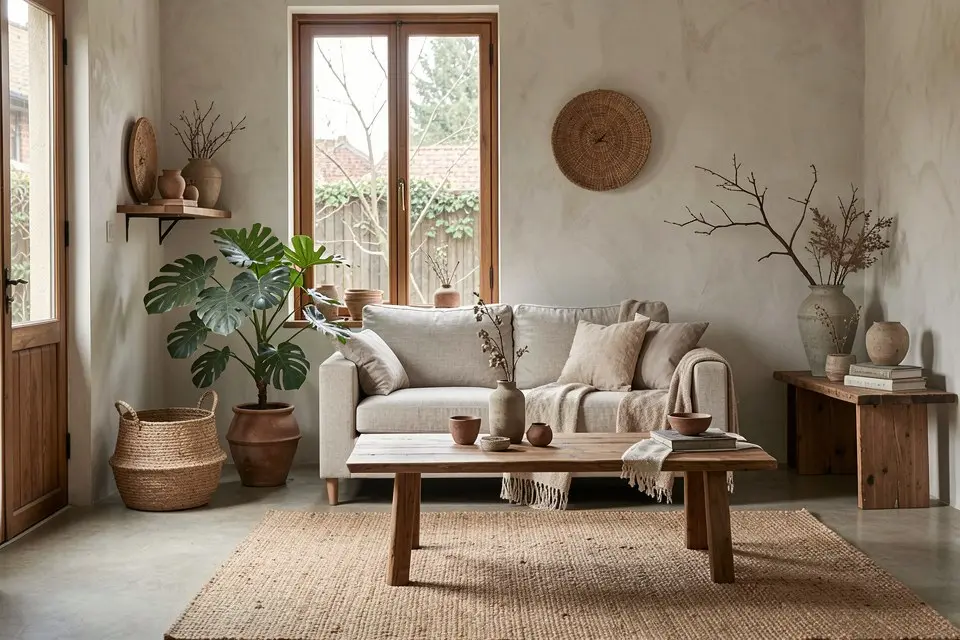
Wabi-sabi style is a room built from natural materials left close to their raw state, an earthy palette of clay, stone, oatmeal and charcoal, handmade objects that show the hand, and a lot of empty space. The imperfection is in the materials — irregular ceramics, textured plaster, worn wood, rumpled linen — not in the housekeeping. Done well it feels calm, warm and slightly old. Done badly it looks unfinished or dusty.
The term comes from Japanese aesthetics: wabi is roughly quiet, rustic simplicity, and sabi the beauty that comes with age and wear. You do not need to study either to use the style. You need to know which choices produce the effect and which just look neglected.
What makes a room read as wabi-sabi
Five things, in order of impact:
- Textured walls. Flat white paint is the biggest thing standing between most rooms and this style. Lime plaster, clay paint or limewash gives walls movement and depth, so the room feels finished even with little furniture.
- A narrow, earthy palette. Four or five colours from the ground: clay, sand, stone grey, moss, charcoal.
- Raw or lightly finished natural materials. Oiled or unfinished wood, linen, stone, clay, paper, wool.
- Handmade, irregular objects. A bowl that is not perfectly round. A vase with a drip in the glaze. A stool with visible tool marks.
- Emptiness. Fewer pieces than you think you need, and bare surfaces between them.
If you only do two, do the walls and the emptiness.
The palette
Wabi-sabi colours are the colours of materials, not of paint cards. Think of what you would find in a riverbed or a potter’s workshop.
| Role | Colours | Where |
|---|---|---|
| Base (60–70%) | Warm off-white, oatmeal, pale clay, putty | Walls, ceiling, large textiles |
| Secondary (20–30%) | Sand, raw umber, mushroom, warm stone grey | Sofa, rug, curtains, larger wood |
| Depth (5–10%) | Charcoal, soot black, dark walnut | Ceramics, a stool, a frame, iron |
| Life (under 5%) | Moss, olive, dried-grass green | Branches, one plant, a cushion |
Avoid bright white and anything that looks synthetic: saturated colours, chrome, high gloss. Muted, warm and slightly dusty is the target. The undertone method for choosing paint applies here with a strong bias toward warm and red-yellow undertones; cool grey-white walls kill the style fastest.
Walls: where the budget should go
A textured wall changes the room more than any sofa in this style. Your options, by cost and effort:
- Limewash paint: a mineral paint brushed on in overlapping strokes so it dries cloudy. DIY-friendly. Materials run about €8–€15 per m² for two coats; a 4 × 5 m room with 2.6 m ceilings is roughly €350–€600 in materials. It needs a mineral primer on previously painted walls.
- Clay paint: matte, chalky, slightly uneven. Easier than limewash and more forgiving. €6–€12 per m².
- Lime or clay plaster (tadelakt, marmorino, earth plaster): trowelled on by a professional for real depth. €35–€80 per m² fitted. Worth it on one or two walls, especially behind a bed or in a bathroom.
If a textured finish is not possible — a rental, for example — pick the warmest, flattest off-white you can find and let textiles and ceramics carry the texture. See the rental-friendly upgrades guide for what you can change without losing the deposit.
Furniture: low, solid, few
Wabi-sabi furniture tends to be low, heavy-looking and simple. It often comes from the second-hand market, which suits the style because age is part of the look.
- Sofa: low back, loose linen or cotton slipcover in oatmeal or stone. Rumpled is fine; that is the point of a slipcover. A new linen slipcover for an existing sofa runs €250–€600.
- Tables: solid wood with visible grain and some wear. A reclaimed oak or elm coffee table is typically €150–€500 second-hand. Avoid glass and anything veneered to look perfect.
- Seating: a wooden stool, a woven rush or paper-cord chair, floor cushions.
- Storage: closed, plain, wooden. Open shelving works only if you keep it nearly empty.
Wood tones should stay warm and matte. If you have more than one wood in the room, the guide to mixing wood tones explains how to keep them from fighting; in wabi-sabi the usual mix is pale oiled oak plus one dark, almost black wood.
Textiles and objects
Textiles do a lot of the softening. Stick to natural fibres in their natural textures:
- Linen for curtains, bedding and slipcovers, washed until soft and not ironed. Stonewashed linen bedding costs €120–€300 a set and gets better with age.
- Wool and jute for rugs. A hand-loomed wool rug in undyed tones is €250–€800 at 200 × 300 cm; jute is €100–€250.
- Cotton and hemp for cushions, with visible slubs in the weave.
Objects should be few, handmade and useful. A good wabi-sabi shelf might hold one irregular vase with a single branch, two stacked bowls and a book. That is all. Local ceramics markets and potters’ studios are the best source; a handmade vase is typically €30–€120, and one good one does more than five mass-produced ones.
Plants follow the same rule: one sculptural branch or one plant with an interesting form, rather than a jungle. Dried grasses, olive branches and bare twigs all work and need no care.
Light
Wabi-sabi rooms are low-lit and warm. Daylight should be softened with linen curtains rather than blocked. At night use lamps rather than ceiling light, with warm bulbs at 2200–2700 K. Paper lanterns (€40–€200) are the classic, both pendant and floor-standing, and they are also one of the cheapest ways to shift a room toward the style.
Candles are part of the look but not required. A textured wall lit from the side by a low lamp is where limewash and plaster really show their depth, so place at least one lamp near the textured wall.
Wabi-sabi vs Japandi vs minimalism
The three get confused because they share restraint and natural materials. The differences matter when you are choosing pieces:
- Japandi is clean-lined and precise, mixing Japanese restraint with Scandinavian function. Surfaces are smooth, joints are neat, things look new.
- Minimalism is about reduction. It can be cold and hard-edged — concrete, glass, white lacquer — and still be minimalist.
- Wabi-sabi is reduced but warm and rough. It welcomes age, cracks, patina and handwork. It would rather have a wobbly handmade stool than a perfect designer one.
A quick test: if a new scratch on the table would upset you, you are furnishing a Japandi or minimalist room. If it would just become part of the table, you are in wabi-sabi.
Mistakes that make it look shabby
- Confusing imperfect with dirty. Worn wood, linen creases and crackle glazes are fine. Dust, stains and broken things are not. The style needs a clean house more than most.
- Too many objects. Ten handmade vases are clutter, however beautiful each one is.
- A palette that drifts. One bright cushion or a glossy white kitchen door breaks the whole room.
- Buying “rustic” decor. Mass-produced faux-distressed signs and fake-aged frames are the opposite of the style. Real age or real handwork only.
- Ignoring comfort. Wabi-sabi rooms should be comfortable to sit in. A low, deep sofa and a thick rug are part of the look.
A realistic budget for a living room
For a 4 × 5 m living room, keeping the existing sofa and table:
| Item | Cost |
|---|---|
| Limewash on all walls (DIY, materials) | €350–€600 |
| Linen sofa slipcover | €250–€600 |
| Undyed wool or jute rug, 200 × 300 cm | €100–€800 |
| Linen curtains, two panels | €120–€300 |
| Paper floor lantern and pendant | €80–€300 |
| Three or four handmade ceramics | €100–€350 |
| Total | €1,000–€2,950 |
The cheaper end skips plaster and uses jute; the higher end adds a better rug and more handmade pieces. It is worth previewing before committing to a wall finish: upload a photo to Homie’s Style Transfer with an image of a wabi-sabi room you like as the reference, and you can see how your own layout looks with textured walls and an earthier palette. The style transfer guide covers picking a reference photo that transfers well.
Where to start this weekend
- Clear every surface in one room down to one or two objects.
- Remove anything bright, glossy or plastic from view.
- Swap cool-white bulbs for 2700 K ones.
- Put one branch in a handmade vase.
- Test a limewash sample board (about €15) against your wall at different times of day.
If the room already feels calmer after the first three, you are on the right track. The walls and textiles can follow at whatever pace the budget allows, which is itself very much in the spirit of the style.