People use “modern” and “contemporary” as if they meant the same thing, and in everyday conversation they often do. In interior design they are two different ideas. Knowing the difference helps when you search for inspiration, brief a designer or ask an AI tool for a specific look. This guide explains modern vs contemporary interior design in plain terms and shows how to test both on your own room.
The short answer
- Modern is a historical style. It grew out of the modernist movement of the early and mid 20th century and it does not change.
- Contemporary means “of the moment.” It describes whatever design is current, so a contemporary room from 1995 looks different from one today.
They overlap because contemporary design today borrows heavily from modernism: clean lines, little ornament, open plans. The differences show up in color, materials and furniture shapes.
What defines modern interior design
Modern design comes from architects and designers who rejected heavy ornament in favor of function and honest materials. In homes, it usually shows up as the mid-century version.
- Colors: earthy and warm — walnut, teak, olive, mustard, rust, cream.
- Materials: natural wood, leather, molded plywood, wool, some chrome.
- Furniture: low, horizontal, with tapered legs and simple geometric forms.
- Mood: warm, grounded and a little retro.
Our mid-century modern style guide goes deeper into the pieces and palettes that define this look.
What defines contemporary interior design
Contemporary design reflects what is current. In recent years that has meant:
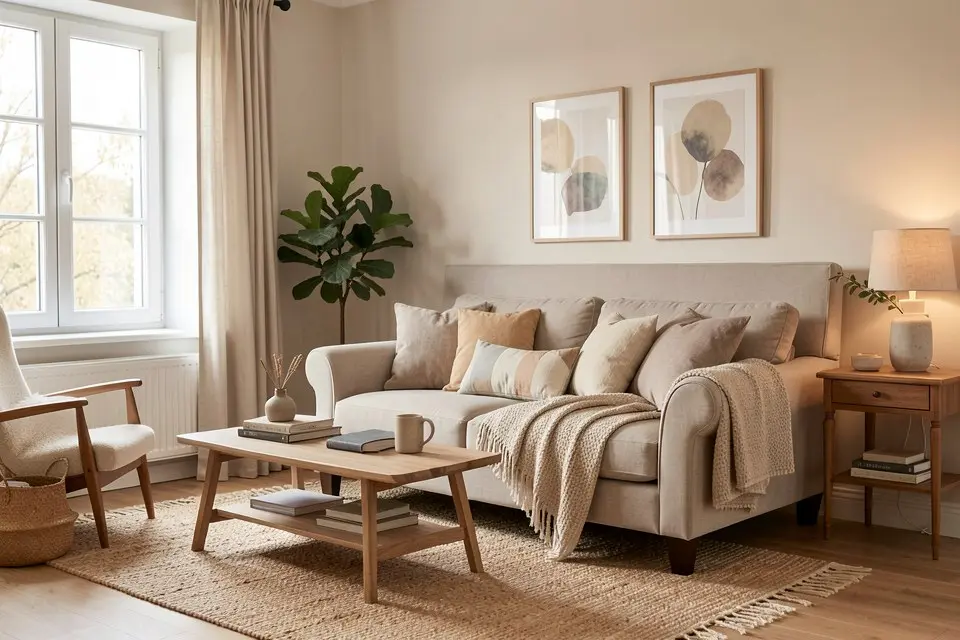
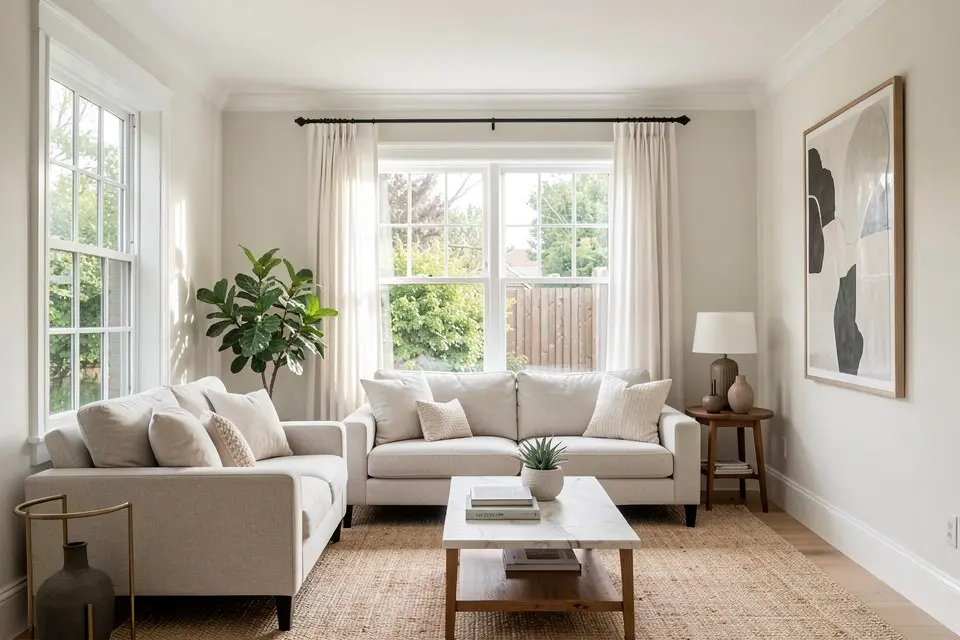
- Colors: neutral bases — white, warm white, greige, black accents — with color added through art and textiles.
- Materials: a mix of metal, glass, stone, concrete and pale or medium wood.
- Furniture: clean-lined but often curved; rounded sofas, organic shapes and sculptural lighting have been prominent.
- Mood: fresh, open, uncluttered and sometimes a little gallery-like.
Because it moves with trends, contemporary design borrows from other current styles. The minimalist interior design guide and the Japandi style guide describe two strands that shape it right now.
Side-by-side comparison
| Element | Modern | Contemporary |
|---|---|---|
| Time frame | Fixed, roughly 1920s–1970s | Always the present |
| Palette | Warm, earthy, some bold accents | Neutral base, color through accessories |
| Wood | Central, often walnut or teak | Used, but shares space with metal and stone |
| Lines | Straight, horizontal, tapered legs | Straight and curved, organic forms |
| Ornament | Almost none | Minimal, but sculptural pieces are common |
| Feel | Warm and retro | Fresh and current |
How to tell which one you like
Collect ten photos of rooms you love and look for patterns:
- Lots of wood, warm tones and furniture on slim legs point to modern.
- Mostly white or pale walls, metal and glass, curved furniture and big art point to contemporary.
- A mix of both is common, and it is often called transitional when traditional elements are also involved; the transitional style guide explains that blend.
Mixing the two
A modern-contemporary blend is one of the easiest looks to live with.
- Keep the shell contemporary: light walls, simple trim, current lighting.
- Bring in two or three modern pieces: a walnut sideboard, a leather lounge chair, a tapered-leg coffee table.
- Repeat wood tones so they feel intentional. The how to mix wood tones guide explains how.
- Choose one accent color from the modern palette — rust, olive or mustard — and repeat it in pillows, art and a vase.
Test both styles on your own room
Descriptions only go so far. The quickest way to decide is to see your own room in each style. Take a clear photo and upload it to Homie’s room redesign tool, then generate one version in mid-century modern and one in contemporary. Keep the same layout so you compare only the style.
If you have a reference photo — a hotel lobby, a friend’s living room, a magazine page — the style transfer tool applies its look to your room. The style transfer guide explains how to pick a good reference. Once you have chosen a direction, the color palette tool pulls matching paint colors from the render.
Common mistakes
- Going too cold. An all-white contemporary room with glass and chrome can feel sterile. Add wood, texture and plants.
- Over-theming modern. A room full of vintage-looking pieces can feel like a set. Mix in a few current items.
- Ignoring scale. Low modern furniture can look lost in a room with high ceilings; balance it with tall art, a floor lamp or large plants.
Modern and contemporary room by room
Living room
Modern: a low walnut sideboard, a leather lounge chair, a tweed sofa on tapered legs and a sputnik or arc lamp. Contemporary: a curved boucle sofa, a stone coffee table, a sculptural floor lamp and a large abstract canvas.
Kitchen
Modern kitchens favor flat-panel wood cabinets and colored tile. Contemporary kitchens often use handleless cabinets in matte white, greige or black, with quartz or stone counters and a waterfall island.
Bedroom
Modern: a platform bed in wood, pendant or wall lights, graphic bedding. Contemporary: an upholstered low bed, soft layered neutrals and minimal nightstands.
Materials and finishes compared
The clearest way to tell the two styles apart in a showroom is to look at materials:
| Element | Modern | Contemporary |
|---|---|---|
| Wood | Warm teak, walnut, oak with visible grain | Lighter oak, painted or lacquered surfaces |
| Metal | Brass, chrome, tubular steel | Matte black, brushed nickel, mixed finishes |
| Upholstery | Wool, leather, tweed | Bouclé, performance fabrics, textured weaves |
| Stone | Terrazzo, travertine | Quartz, large-format porcelain |
| Shapes | Organic curves and tapered legs from the mid-century | Whatever is current, from curves to crisp blocks |
| Color | Earthy neutrals with mustard, teal or orange | Neutrals with high contrast or a single current accent |
If a piece looks like it could have appeared in a 1958 magazine, it is modern. If it looks like it came out this year and might look dated in ten, it is contemporary.
Room dimensions that suit both styles
Both styles rely on space around furniture, so clutter undercuts either look. Keep these general guides in mind:
- Leave 30 to 36 inches for walkways through a living room.
- Place the coffee table 14 to 18 inches from the sofa.
- Choose a rug large enough that at least the front legs of every seat rest on it; an 8 by 10 foot rug suits most living rooms.
- Hang art so its center sits around 57 to 60 inches from the floor.
- Leave a few inches of bare wall on either side of major furniture instead of filling every surface.
How to shop for each style
For modern, look at vintage and secondhand shops for mid-century chairs, credenzas and lighting; authentic or well-made reproduction pieces anchor the room. Keep the rest simple. For contemporary, pick one or two current statement pieces, such as a curved sofa or a sculptural light, and keep the big items neutral so you can change accents as trends move. In both cases, buy the sofa and rug first because they set the palette for everything else.
Try it in Homie
- Photograph your living room straight on in daylight.
- In the room redesign tool, run one version with “mid-century modern” and one with “contemporary.”
- Put the two renders side by side and note which details you keep looking at. Those are the pieces to shop for first.