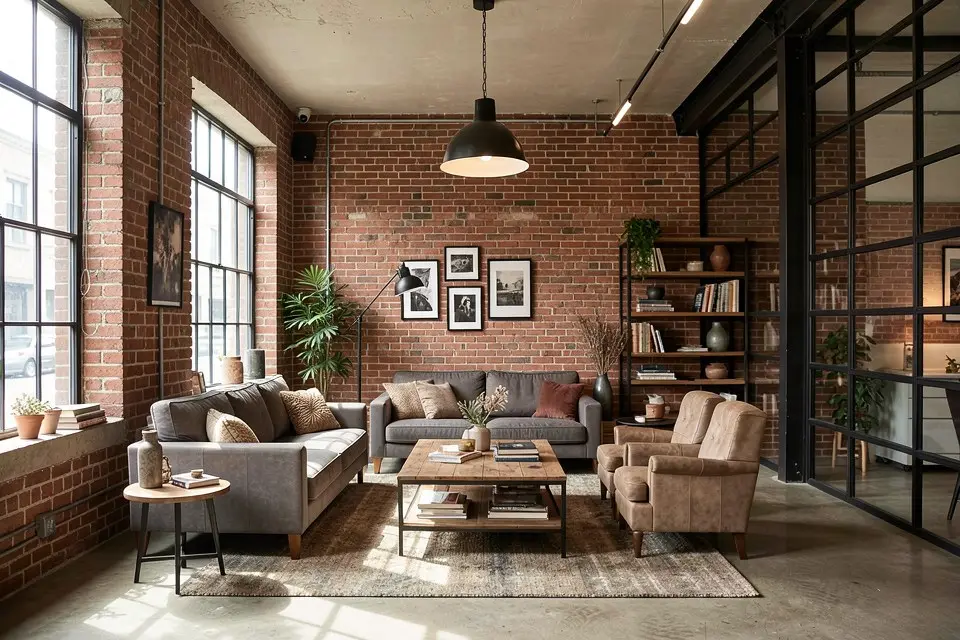
Industrial style is exposed structure, raw materials, and black metal, warmed up with leather and wood, not just a brick-effect wallpaper panel and a filament bulb. Skip the warm layer and the room reads cold rather than raw.
Where the look comes from
The style originates in actual converted factories and warehouses: exposed brick because the drywall was never installed, visible ductwork and conduit because there was no ceiling to hide it in, and steel-framed windows because that’s what industrial glazing looked like. Every element has a structural origin. Reproducing the look in a normal apartment means choosing which of those structural cues to fake, and doing it with real materials rather than printed panels, which is what separates industrial design from industrial-themed restaurant decor.
The five markers
- Exposed or exposed-effect brick or concrete, on at least one wall. A textured paint finish or thin brick veneer works if the structure genuinely can’t be exposed.
- Black or dark bronze metal fixtures: window frames, shelving brackets, light fixtures, stair rails.
- Visible structure as decor: an exposed ceiling beam, visible ductwork, an open shelving unit built from black pipe.
- Leather and aged wood for warmth: a leather sofa or chair, a reclaimed-wood table.
- Warm, low-temperature bulbs in exposed-filament or simple black fixtures, never a stark cool-white LED.
The palette
| Element | Colour |
|---|---|
| Walls | exposed brick or concrete, or a deep charcoal if painted |
| Metal | matte black or dark bronze |
| Wood | reclaimed or aged, mid-to-dark tone |
| Textile | leather, waxed canvas, a heavy wool throw |
Where it goes wrong
The most common failure is stopping at the hard surfaces: brick wallpaper, a metal shelf, a filament bulb, and nothing else. Without leather, wood, or a warm rug somewhere in the room, it reads like an unfinished construction site rather than a considered style. The fix is almost always textile: one leather armchair or a heavy wool throw brings the warmth the hard materials are missing. Mid-century modern pairs well with industrial for exactly this reason: its walnut and leather supply what the metal lacks.
The second failure is going all-black. Black metal, black furniture, black walls together reads as a nightclub rather than a home, especially in a room without much natural light. Keep one large surface, the wall or the floor, in a lighter material so the black has something to contrast against. This is the same balancing act as maximalist interior design: a strong, dark material needs a quieter counterpart or the whole room tips into heaviness.
Room by room
- Living room: a leather sofa (tan or a deep brown, not black), a black metal and reclaimed-wood coffee table, one exposed-brick or concrete-effect wall, a black pendant light with an exposed bulb.
- Home office: a black metal-frame desk with a wood top, open black-pipe shelving, a leather task chair. Combine with the focus-oriented layout advice in home office design ideas if the room needs to work for concentration, not just looks.
- Kitchen: open black shelving instead of upper cabinets, a subway tile backsplash, black matte fixtures and hardware.
- Bedroom: a black metal bed frame, a leather or waxed-canvas bench at the foot, warm-toned wood nightstands to soften the metal.
A worked example
A 4 × 5 m open-plan living room in a standard apartment, currently plain white walls, oak floor, grey sofa, with no structural “bones” to expose.
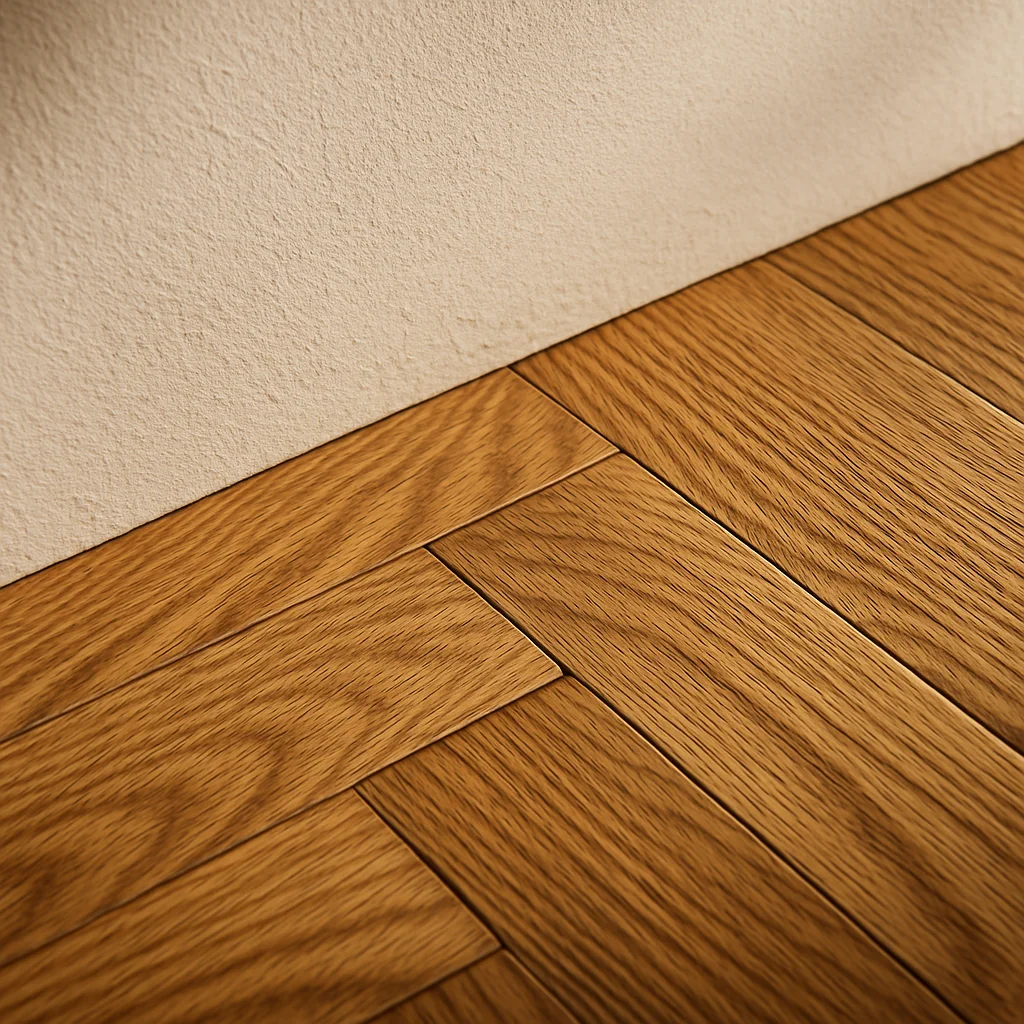
One wall behind the sofa, the natural accent wall in most living rooms, gets a thin brick veneer rather than full structural exposure, which is achievable without construction. The grey sofa is replaced with a tan leather one, the coffee table swaps to a reclaimed-wood-and-black-iron piece, and the ceiling pendant changes to a black fixture with an exposed-look warm bulb. The oak floor stays, it provides the warm counterpoint the style needs. Total spend: €2,200 to €5,500, with the brick veneer and the sofa as the two largest line items.
Try it yourself
If your building genuinely has original brick or ductwork, that’s a strong head start most apartments don’t get, and it’s worth checking the return on exposing it against the numbers in interior painting cost guide before deciding to cover or reveal a wall. To see industrial style applied to your own room, run Style Transfer in Homie on a photo of the space. It preserves your actual wall and window layout and shows the brick, black metal, and leather combination before you commit to a veneer or a new sofa.