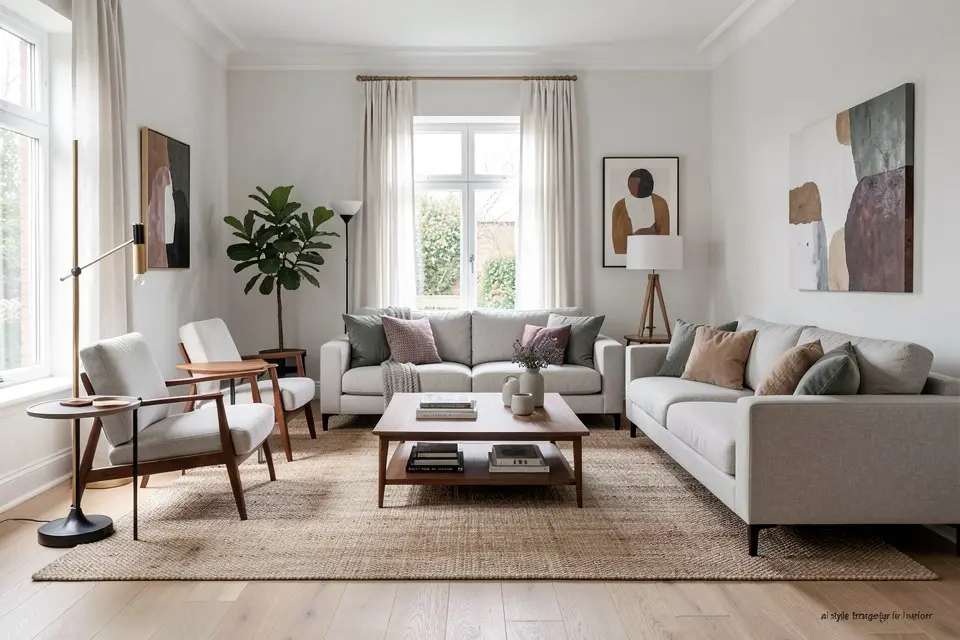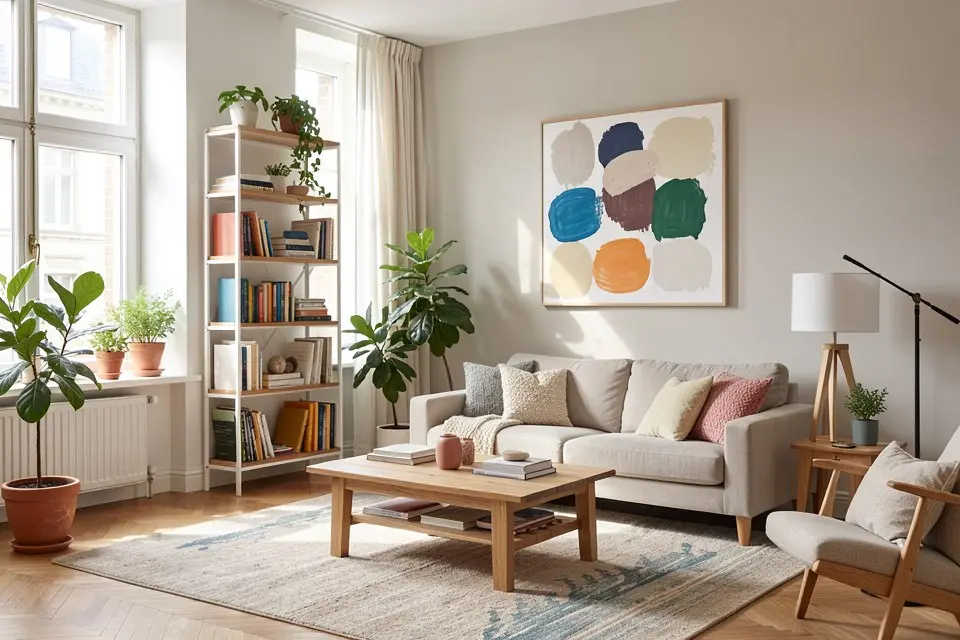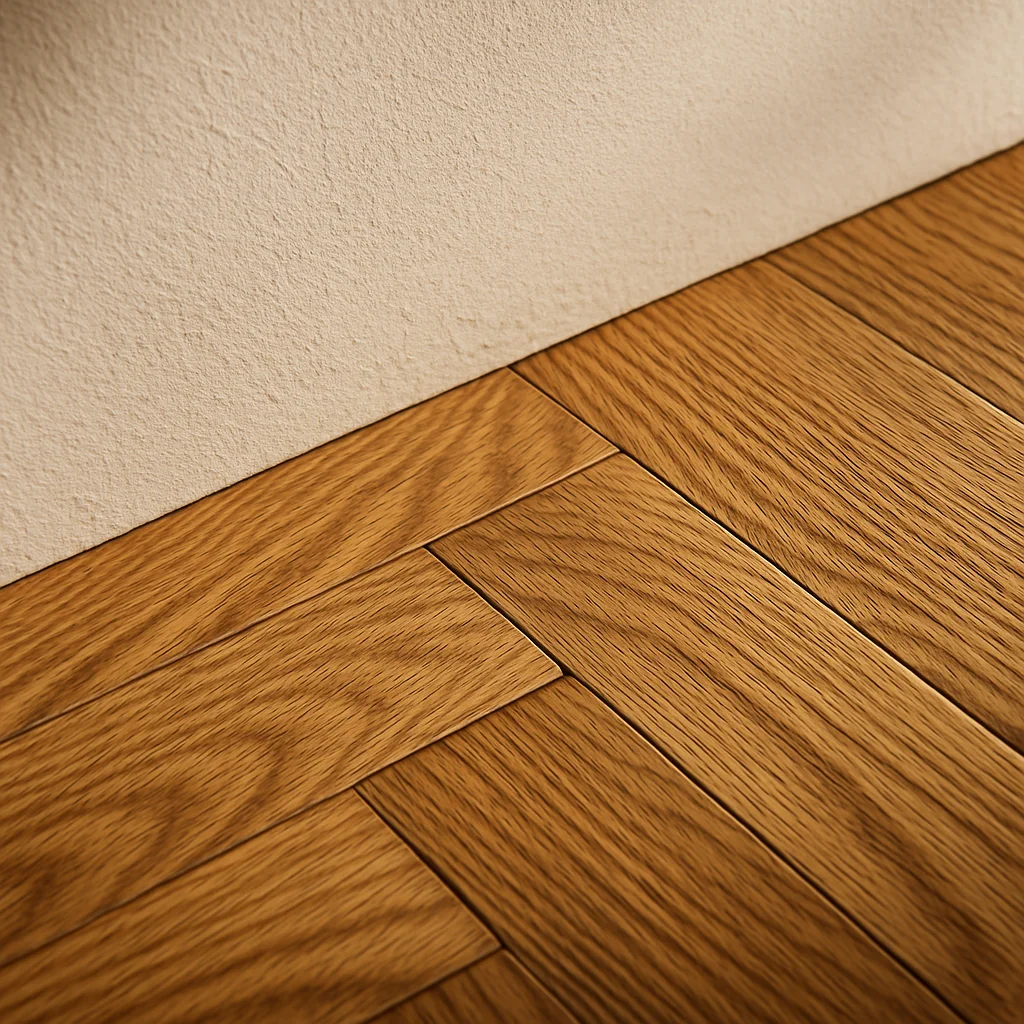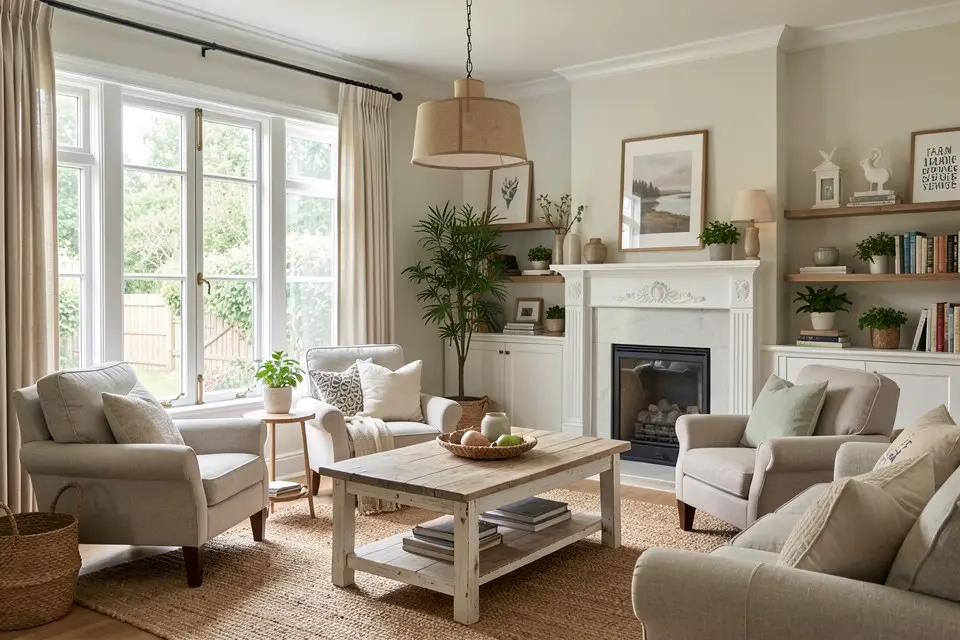
Farmhouse style is solid, painted wood, a warm-white-to-grey palette, and black iron hardware, not shiplap and a sign that says “Gather.” The signage era dated the style badly; the material logic underneath it did not.
What survived the trend cycle
Farmhouse design predates the 2010s Pinterest wave by a couple of centuries: painted panelling, turned-leg tables, apron sinks, and black iron fixtures were practical choices in working homes long before they were a decorating aesthetic. What aged badly was the decorative overlay, mason jars as light fixtures, “Live Laugh Love” signage, distressed-on-purpose everything. What still works is the underlying material palette: solid wood, matte paint, and iron hardware.
The five markers
- Painted wood panelling or beadboard, usually white or a warm off-white, on a wall or as wainscoting.
- Solid, turned-leg furniture in a light-to-mid wood tone, not the tapered mid-century leg and not ornate carved traditional legs.
- Black iron or matte black hardware, cabinet pulls, light fixtures, faucet.
- Woven and knit textiles: a chunky knit throw, a woven basket, a jute rug.
- Open shelving in the kitchen, showing plain white or stoneware dishware rather than closed cabinetry throughout.
The palette
| Element | Colour |
|---|---|
| Walls | warm white, soft greige, or pale sage |
| Wood | light oak or a warm mid-tone, not walnut |
| Hardware | matte black or aged bronze |
| Accent | one muted colour: sage, rust, or dusty blue |
Where it goes wrong
The main failure is decorative literalism: barn-door hardware on a closet that isn’t a barn, oversized wall signage, and distressed finishes applied to furniture that was never actually old. That combination is what people mean when they say farmhouse looks dated; it’s the props, not the palette.
The second failure is going all-white with no wood contrast. A farmhouse kitchen with white cabinets, white walls, and white counters with nothing warm in it just looks like a generic modern kitchen. The wood tone, on open shelving, a table, or exposed beams, is what makes it read as farmhouse rather than plain white-on-white. If you’re weighing this against a cooler, more Scandinavian palette, scandinavian style is the useful comparison: both use light wood and white, but farmhouse adds the black iron and turned-leg detailing that Scandinavian design skips.
Room by room
- Kitchen: shaker-style cabinets in white or sage (kitchen cabinet colour ideas sorts the sages that read farmhouse from the ones that read clinical), black iron hardware, open shelving with plain stoneware, a wood or butcher-block section of counter. Pairs directly with the no-renovation approach in kitchen redesign ideas without renovation since most of this can be done with hardware and paint alone.
- Living room: a slipcovered sofa in a neutral linen, a turned-leg coffee table, a woven rug, black iron sconces or a black pendant.
- Dining room: a solid farmhouse table with turned or trestle legs, a mix of a bench and chairs rather than a matched set.
- Bathroom: shaker vanity in white, black matte fixtures, an apron-style or vessel sink if the budget allows.
A worked example
A 3 × 4 m kitchen with oak cabinets from the 1990s, brass hardware, and laminate counters.
Rather than replacing the cabinets, they get painted in a warm white, a job the DIY-versus-contractor comparison puts firmly in the DIY column if you have a weekend and a sprayer, and the brass hardware is swapped for matte black cup pulls, which alone shifts the read significantly. One run of upper cabinets is removed and replaced with two open shelves in the same wood tone as the cabinets, holding plain white stoneware. The laminate counter stays for now but gets a butcher-block insert on one section. Total cost for this scope: €900 to €2,800, almost entirely paint, hardware, and one shelving change, well under a full renovation.
Try it yourself
If the kitchen is the room in question, the cost math above scales with the ideas in how to get a realistic renovation cost estimate, which is worth running before committing to cabinet paint versus replacement. To see farmhouse applied to your specific kitchen or living room, run Style Transfer in Homie on a photo of the space. It keeps your cabinet layout and window positions intact and shows the painted-wood, black-iron look before you buy any hardware.