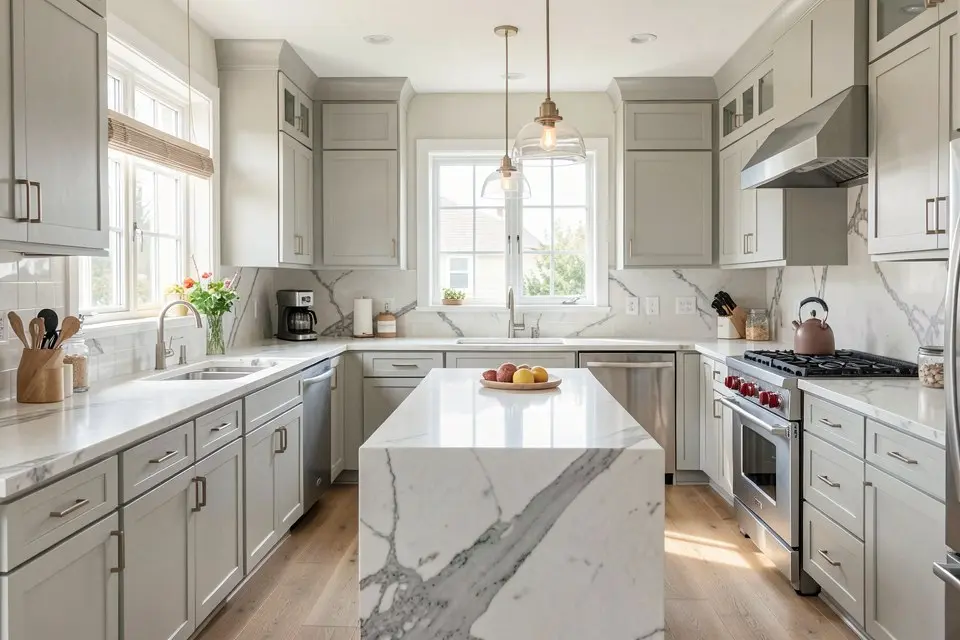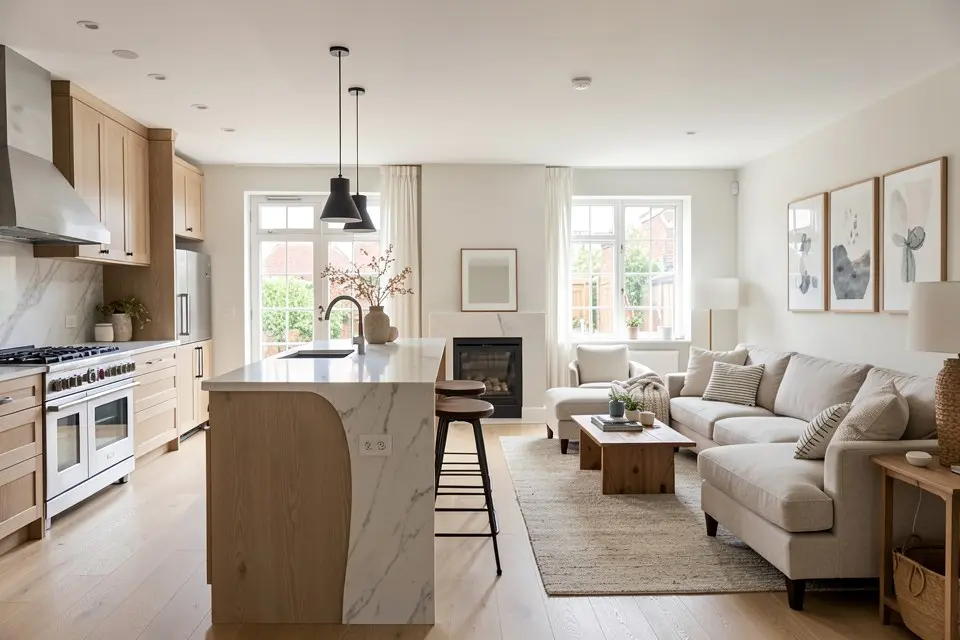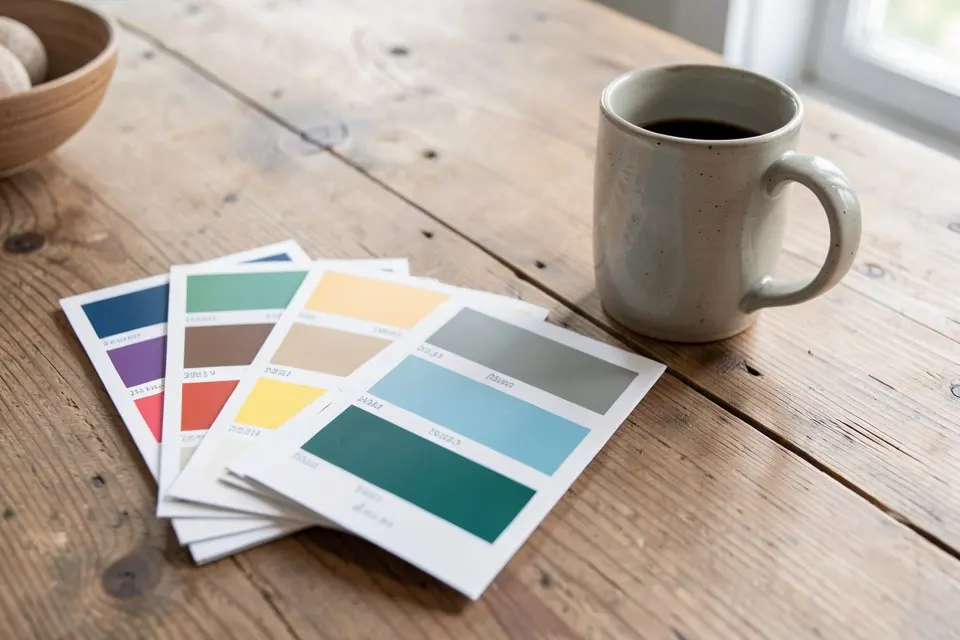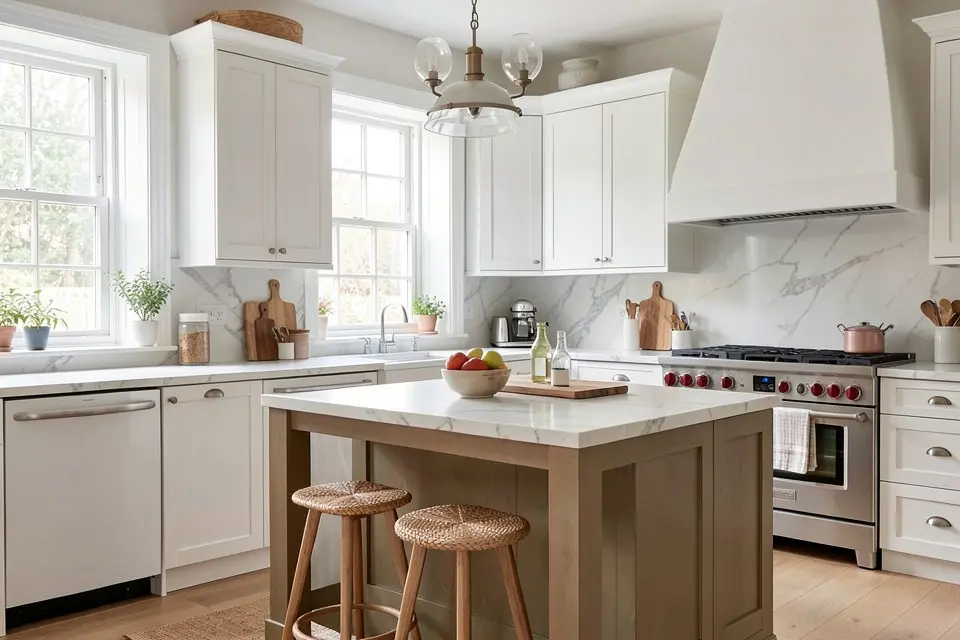
You can change a kitchen’s entire character without moving a single pipe. Most of what reads as “renovation” in a kitchen is actually the cabinets, and cabinets can be painted.
What you can change without a contractor
The core kitchen renovation triangle, plumbing, electrical, and structural walls, almost never needs to move for a redesign to work. What actually changes the room’s look:
- Cabinet fronts. Paint them (with the right primer for laminate or wood), or swap just the doors if the boxes are in good shape.
- Hardware. New handles and knobs are the cheapest visual upgrade in the entire house per euro spent.
- Backsplash. Peel-and-stick tile or thin-set tile applied over existing tile (with proper surface prep) changes the wall without demolition. Peel-and-stick is also the reversible option for renters; rental-friendly apartment upgrades covers what else comes off cleanly.
- Open shelving. Removing a couple of upper cabinet doors, or replacing one run of uppers with shelving, opens the room without any wall work.
- Lighting. Under-cabinet LED strips and a new pendant over an island or peninsula do more for how a kitchen feels at night than almost anything else.
- Countertop resurfacing. Not a full replacement, but epoxy or laminate overlay products exist for tired countertops that aren’t otherwise damaged.
Paint is the biggest lever — what it costs to paint a room covers cabinets as well as walls — and if you’re weighing a real remodel instead, DIY vs hiring a contractor helps decide.
What actually costs money here
| Change | Range |
|---|---|
| Cabinet repaint (mid-size kitchen, hired) | €400 – €900 |
| Cabinet hardware (full kitchen) | €80 – €300 |
| Peel-and-stick backsplash | €60 – €200 |
| Tiled backsplash (professional) | €400 – €1,200 |
| Under-cabinet LED lighting | €100 – €350 |
| Pendant light over island | €80 – €400 |
Compare that to a full renovation, where our renovation cost estimate guide shows kitchen gut jobs regularly crossing €15,000. The gap between these numbers is the whole argument for trying a cosmetic redesign first.
The order that avoids wasted work
- Cabinets first, since their colour dictates everything else. Kitchen cabinet colour ideas narrows the shortlist to shades that work with the floor and worktop you’re keeping.
- Hardware next, while the paint is already being planned.
- Backsplash, once you know the cabinet colour it needs to sit against.
- Lighting last, since it’s independent of colour decisions and easy to slot in whenever the electrician or you are available.
A worked example
A 3.2 × 3.8 m galley-style kitchen with dated oak cabinets, brass hardware from the 1990s, and a plain white tile backsplash that’s structurally fine but visually flat.
The cabinets get sanded, primed, and painted a deep sage green on the lower run and a soft white on the uppers, a two-tone approach that also makes the ceiling feel higher. Sage on the lowers is a farmhouse move; the same two-tone logic works with navy or charcoal for a more modern read. Hardware swaps to brushed brass bar pulls, deliberately keeping a warm metal tone rather than switching to matte black, which would fight the wood floor. The existing white tile backsplash stays, since it’s neutral enough to work with the new cabinet colours, but a new pendant with a warm brass finish goes over the small peninsula, and an LED strip goes under the upper cabinets.
Total spend: roughly €1,100, done in a weekend plus paint drying time, with zero contractors needed beyond an electrician for the pendant’s wiring. If you’re weighing whether a full renovation makes more sense here, our guide to weighing DIY against a contractor is a useful gut check before committing to either path.
Try it on your own room
Photograph your kitchen straight-on from the entry with both cabinet runs visible, then run Room Redesign in Homie to preview a new cabinet colour, hardware, and lighting before buying paint. It’s a fast way to confirm sage green (or whatever colour you’re considering) actually works with your existing floor and countertop before committing a whole weekend to it.