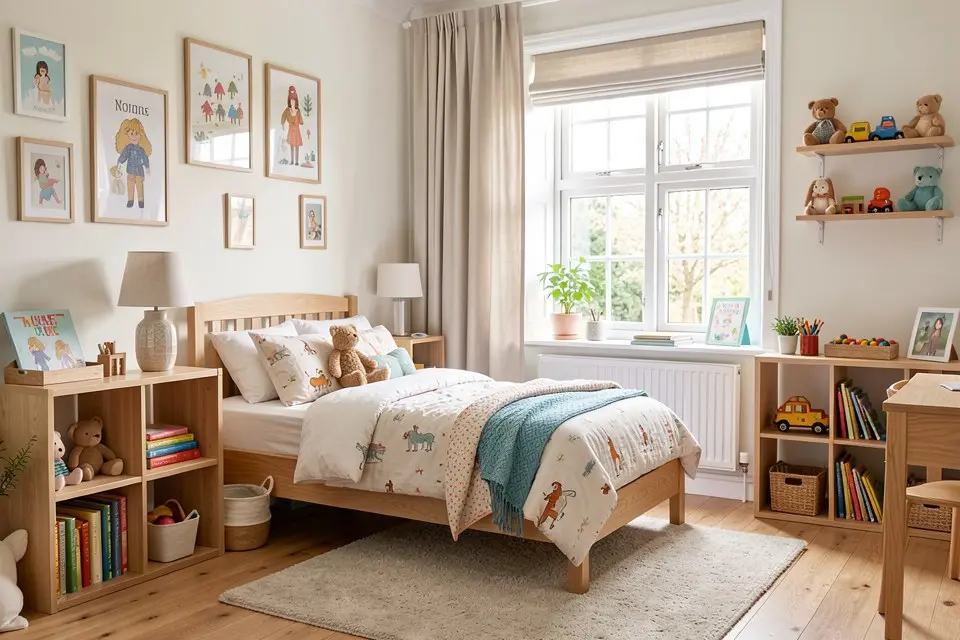
The mistake in most kids’ rooms is designing for the child’s current age instead of the next five years of it. A room themed entirely around dinosaurs or a specific show has maybe an 18-month shelf life before it needs a redo.
Separate what should last from what should change
Split every decision into two buckets: structural choices that should survive a decade, and decorative choices that should be cheap and easy to swap as interests shift.
Should last: wall colour (neutral or a durable, not-too-literal colour), furniture (dresser, bed frame, desk), flooring, and any built-in storage.
Should be swappable: bedding, an accent wall or removable wallpaper, wall art, a rug, and lighting fixtures like a themed lamp.
This split means a room can go from dinosaurs to space to a plain teenage aesthetic without ever touching the furniture or the base wall colour, just the layer on top.
Furniture that earns its keep
A kids room’s furniture needs to work at four years old and at fourteen. A crib obviously doesn’t survive that span, but a full-size or twin bed frame, a dresser with drawers deep enough for adult clothes, and a desk sized for a growing child all can. Buying furniture explicitly meant for the “toddler” phase (character beds shaped like cars, tiny desks) is money spent on something with a two-year lifespan.
If the room is currently serving as a nursery and will need to transition, our nursery design ideas guide covers the earlier stage of exactly this same before-they-grow-up problem, including which nursery items are worth buying built to last versus which are genuinely just for the first year.
Storage matters more here than in any other room
Kids’ rooms generate more loose objects per square metre than any other room in the house: toys, art supplies, sports gear, books. Closed bins on open shelving (rather than fully open shelving alone) let a child put things away themselves while keeping visual chaos contained. A single low shelf a child can actually reach does more for a tidy room than a tall shelf they need help with.
The storage principles overlap with closet design ideas, and if you’re planning ahead from the newborn stage, planning a nursery that converts covers what should last into this phase.
What it costs
| Change | Range |
|---|---|
| Full-size bed frame (grows with child) | €200 – €600 |
| Dresser (adult-sized drawers) | €200 – €700 |
| Removable wallpaper accent wall | €80 – €250 |
| Bin storage system | €60 – €200 |
| Repaint (12 m² room) | €120 – €250 DIY |
A worked example
A 3 × 3.4 m room for a five-year-old currently painted bright blue with a full wall decal of cartoon characters, furnished with a toddler-scale bed the child has already outgrown.
The room gets repainted a warm, pale sage, a colour that reads calm at five and doesn’t feel babyish at twelve; the calmer end of bedroom colour ideas is the right shortlist for that job. The toddler bed is replaced with a twin frame that will serve through the teenage years. One wall gets removable wallpaper with a simple geometric pattern in a colour the child picked, easy to strip and replace in a few years without repainting the whole room. Removable wallpaper is also the standard trick in rental-friendly apartment upgrades, for the same reason. Storage shifts to a low open shelf with labeled fabric bins at the child’s height, plus the existing dresser repainted white rather than replaced.
Total spend: roughly €650, with the bed and dresser being the only items expected to still be there in a decade, exactly as planned.
Try it on your own room
Photograph the room from the doorway, then run Room Redesign in Homie to test a wall colour and layout that works now and won’t need a redo in two years. If you’re furnishing the room from scratch, the furniture budget planning guide is a useful reference for deciding where to spend more (bed, storage) and where to save (decor that will get swapped anyway).