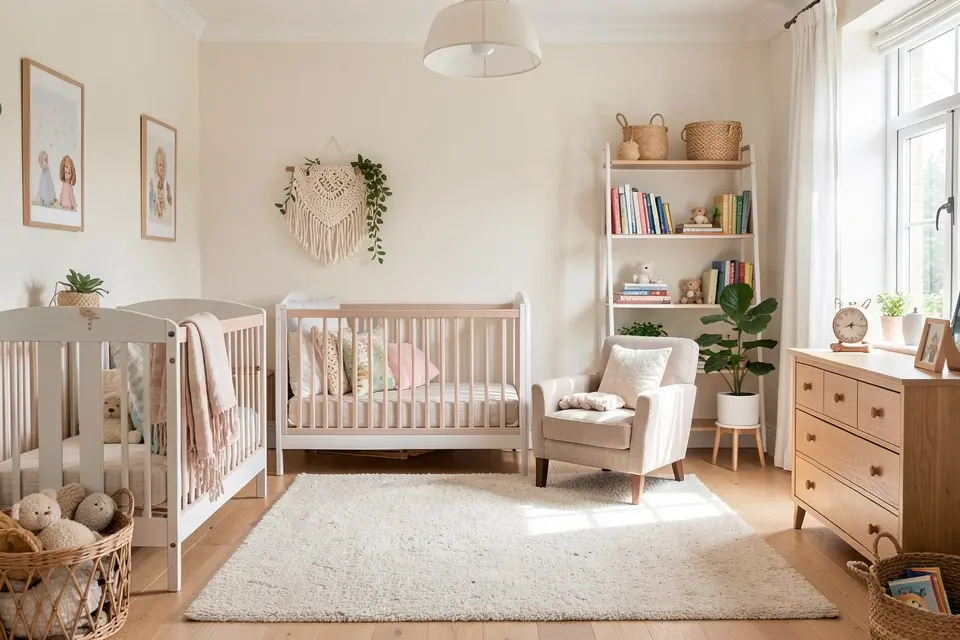
A nursery gets over-planned on theme and under-planned on the two things that actually matter for a newborn: darkness and reachable storage.
What a nursery actually needs versus what’s optional
Actually needed:
- A safe, code-compliant crib or bassinet.
- Blackout curtains or blinds, genuinely blackout, not just “room darkening.”
- A changing surface with everything within arm’s reach (you will not have a free hand to walk across the room).
- Closed storage for clothes, since baby clothes multiply fast and open piles become unmanageable within weeks. The drawer-and-bin logic in walk-in closet design ideas scales down to a single dresser.
Optional, in order of how much most parents end up valuing them:
- A glider or comfortable chair for feeding, genuinely useful but expensive.
- A rug, mostly for when the baby starts crawling, not needed on day one.
- Themed wall art or a mural, purely aesthetic.
- A sound machine, useful but not decor.
Buying the optional list before the needed list is the most common nursery budget mistake, usually driven by registries and showroom displays rather than what the first three months actually require. The anchor-first sequencing in the furniture budget planning guide applies here with the crib as the anchor.
Build for the crawling and toddler phase, not just the newborn phase
A nursery designed only for a newborn gets outgrown within a year, and a lot of nursery spending assumes the baby stays an immobile bundle indefinitely. Two decisions extend the room’s life:
- A convertible crib that becomes a toddler bed, stretching one purchase from year one to roughly year three or four.
- Storage placed at an adult’s reach now, with a plan to add lower storage later once the child starts wanting to grab their own things, similar to the approach in our kids room design ideas guide for the stage right after this one.
What it costs
| Item | Range |
|---|---|
| Convertible crib | €250 – €800 |
| Blackout curtains | €60 – €180 |
| Changing table or dresser-topper combo | €150 – €500 |
| Glider or feeding chair | €200 – €900 |
| Full nursery paint + basic decor | €200 – €500 |
A full nursery, crib through decor, realistically lands between €900 and €2,800 depending on how much is bought new versus secondhand, which is common and perfectly fine for cribs manufactured after current safety standards.
The same priorities carry on as the child grows: designing a kids’ room that grows with them covers the furniture and storage that survive age five to fifteen, and a small-budget room makeover shows where to save.
A worked example
A 2.6 × 3 m spare room being converted into a nursery, previously used as general storage, with one window and no existing furniture.
The crib, a convertible model, goes against the longest wall away from the window to avoid drafts and out of direct light. Blackout curtains go up first, before any other decor decision, since reliable naps depend on them more than anything else in the room. A dresser doubles as the changing surface with a topper, positioned within a step of the crib so nothing requires walking away mid-change. The room is painted a soft, warm white rather than a themed colour (the calm end of bedroom colour ideas works for a nursery too), with a single removable wall decal of a simple shape as the only “themed” element, since it can be removed without repainting when the child ages out of it. A secondhand glider, checked for structural safety, sits in the corner near the window for daytime feeding with natural light.
Total spend: roughly €1,050, most of it on the crib and dresser, both of which will still be useful furniture years past the nursery stage.
Try it yourself
Photograph the empty room from the doorway (see how to photograph a room for AI redesign for framing), then run Room Redesign in Homie to test crib placement, wall colour, and layout before buying furniture. If the room needs to transition into a toddler or kids’ room in a couple of years, planning that transition now with removable rather than fixed decor will save a full redo later.