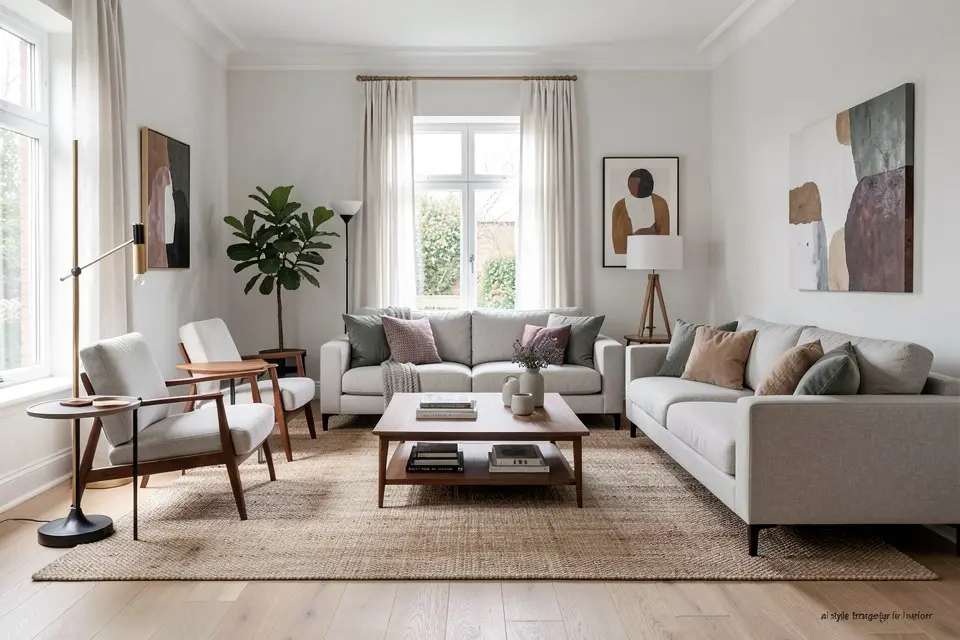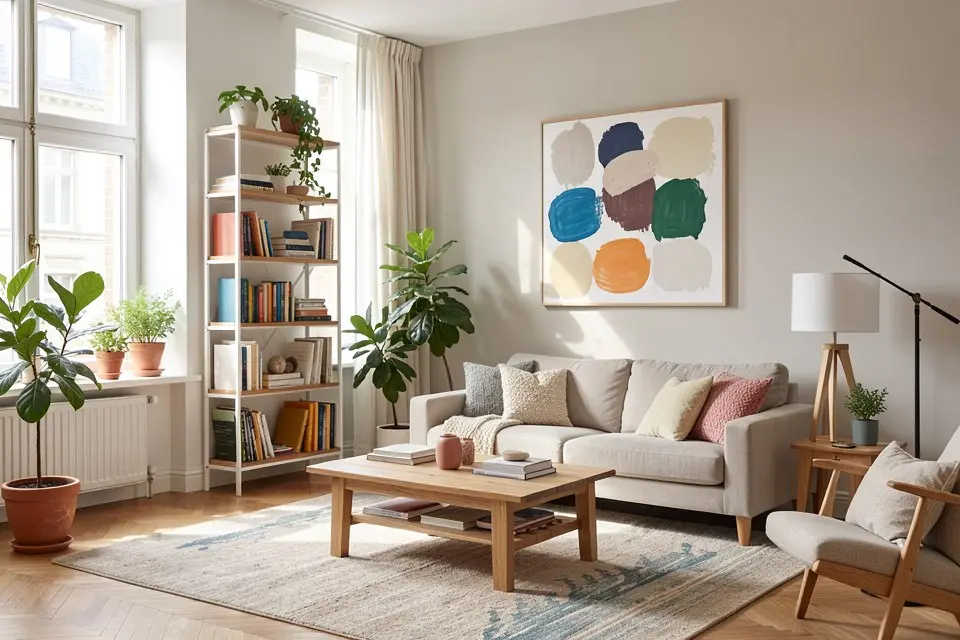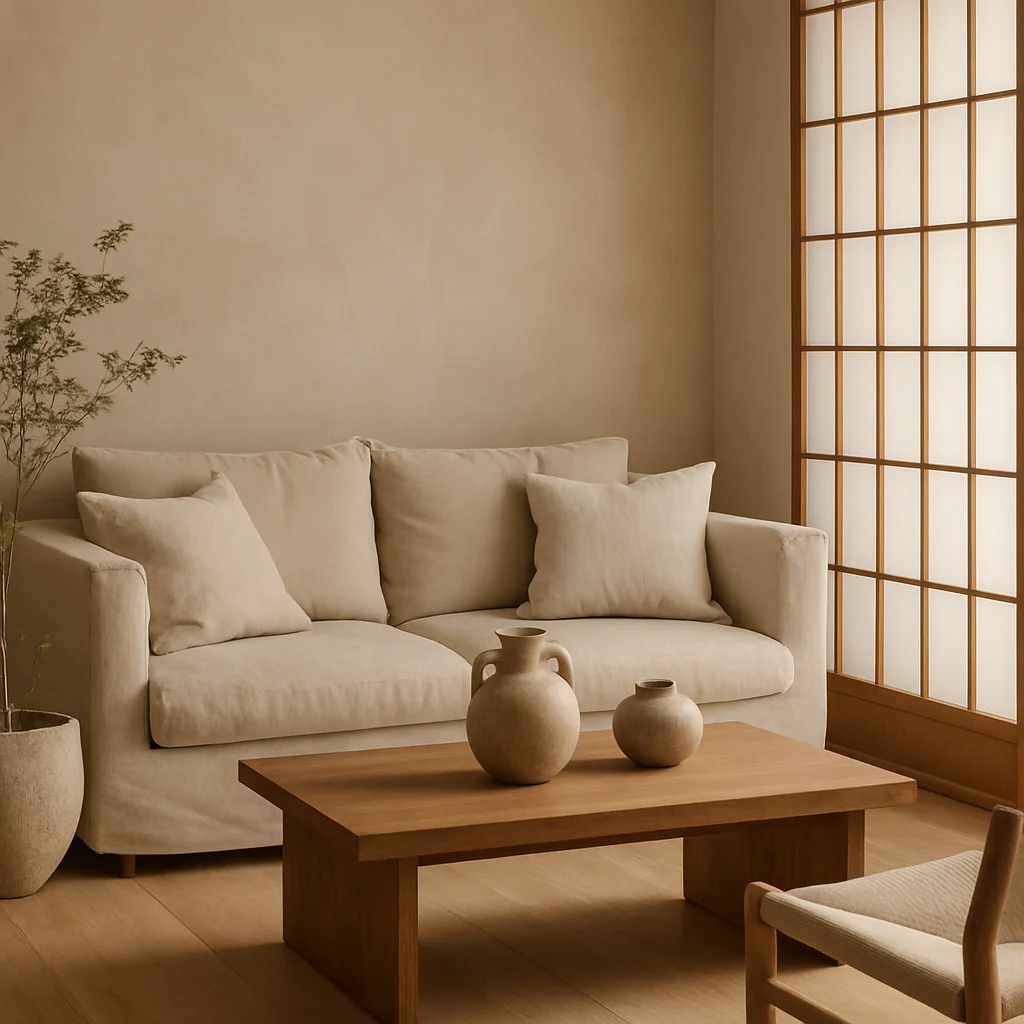
Coastal style is light, texture, and a narrow blue-to-white palette, not shells, rope, and a wooden “Beach House” sign. The moment you add literal beach objects, the style stops being a design language and becomes a souvenir shop.
What actually reads as coastal
The style borrows three things from an actual shoreline: bleached, weathered wood tones, linen and cotton in undyed or pale colours, and light that bounces rather than gets absorbed. None of that requires a single seashell. A well-done coastal room could sit two hundred kilometres from the nearest coast and still read correctly, because the cues are material and light, not iconography.
The five markers
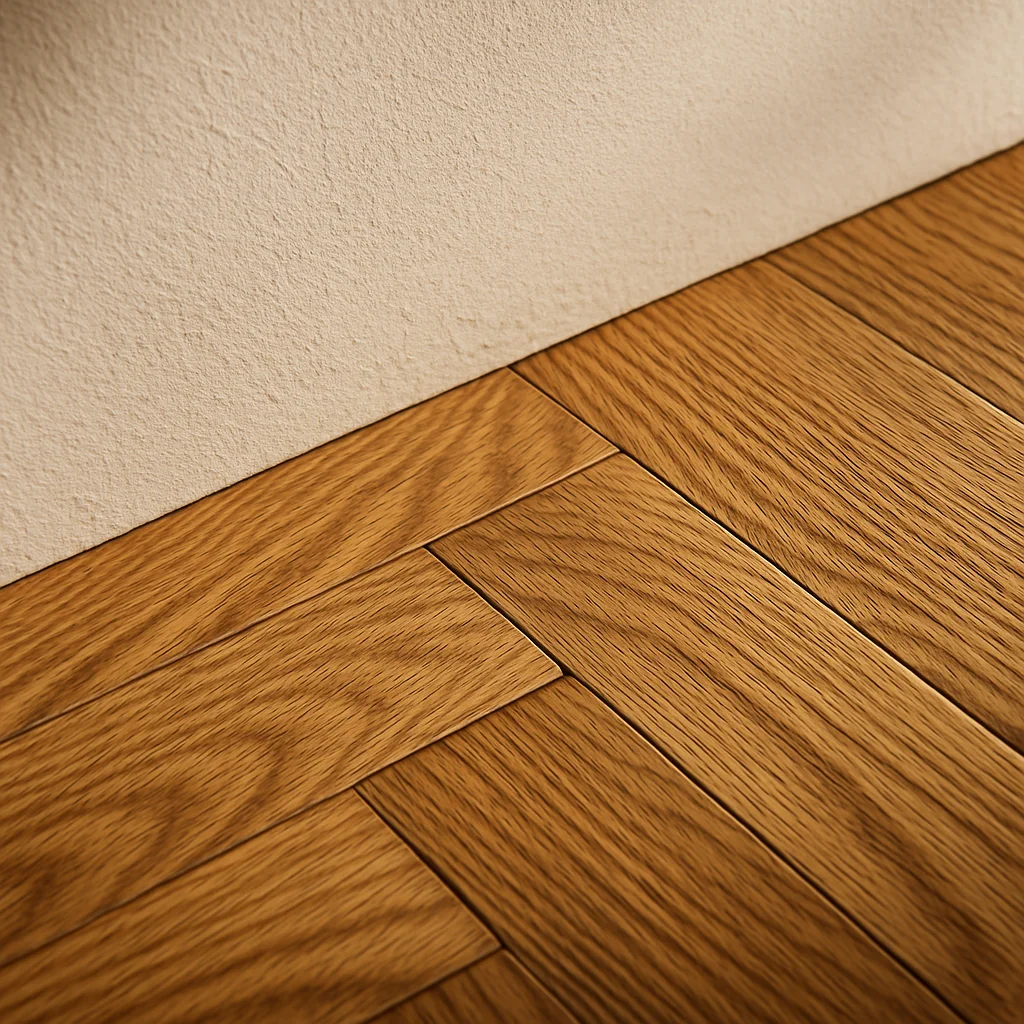
- Bleached or whitewashed wood, never dark stain. Floors, beams, and furniture legs lean pale, sometimes visibly grain-showing.
- Layered whites and off-whites rather than one flat white. Walls, trim, and ceiling sit in slightly different warm-whites so the room doesn’t feel clinical. Choosing three whites that agree is an undertone exercise; how to choose paint colours by undertone explains why a pink-leaning white next to a green-leaning one looks dirty.
- Rattan and woven natural fibre for chairs, lampshades, and baskets. This is the texture that keeps an all-white room from feeling sterile.
- One blue, used sparingly. A single denim, navy, or sea-glass blue, on cushions or a single piece of art, never painted across every wall.
- Unlined linen curtains and slipcovers. Fabric that moves and creases rather than sitting stiff.
The palette
| Element | Colour |
|---|---|
| Walls | warm white, oyster, or the palest grey-blue |
| Floors | bleached oak, whitewashed pine, or a light natural stone |
| Textiles | undyed linen, cotton, jute |
| Accent | one denim or navy blue, used on under 15% of the room |
Where it goes wrong
The main failure is literalism: anchors on cushions, a rope-wrapped mirror, a “Life’s Better at the Beach” sign. These read as theme decor rather than interior design and date within a year. The second failure is going too blue: navy walls, navy sofa, and blue-and-white stripe curtains together reads as a hotel lobby, not a home. Treat blue the way you’d treat any accent colour in maximalist interior design — even in a bold style, one strong colour needs restraint in how often it repeats.
The third failure is skipping the texture layer. An all-white room with white walls, white sofa, and no rattan or jute anywhere just looks unfinished, not coastal. The natural fibre texture is what separates coastal from plain minimalist white.
Room by room
- Living room: a slipcovered linen sofa, a rattan armchair, a jute or sisal rug, one framed piece of abstract art in blue and white.
- Bedroom: whitewashed or rattan headboard, linen bedding in white or oat, a woven pendant shade. This overlaps with the calming-palette advice in bedroom redesign ideas if sleep quality is the real goal.
- Bathroom: white or pale grey tile, a timber stool, woven baskets for storage instead of plastic bins.
- Dining room: a bleached-oak table, rattan or woven-back chairs, a single pendant in a natural material like rope-wrapped iron or paper.
A worked example
A 3.5 × 4.5 m bedroom with dark oak furniture, navy curtains, and beige walls, currently reading more “hotel room” than coastal.
The dark oak dresser gets swapped or painted in a soft white; the navy curtains, kept but relined in a lighter unlined linen so they move instead of hanging stiff, become the single blue accent instead of competing with new blue elsewhere. The beige wall gets repainted in a warm oyster white. A jute rug replaces a synthetic one, and one rattan pendant shade replaces a boxy drum shade. Budget for this scope typically runs €600 to €1,800: paint, one rug, one light fixture, and relined curtains, without replacing the bed frame.
Try it yourself
Coastal pairs naturally with a real seaside or lakeside property; if you’re weighing a full exterior refresh alongside the interior, curb appeal ideas covers the outside half of that same light-and-material logic. To see coastal applied to your own room, run Style Transfer in Homie on a photo of the space. It preserves your actual layout and window placement while swapping in the bleached wood tones, the linen textures, and a single restrained blue, so you can see whether your room has enough natural light to carry the look before buying anything.