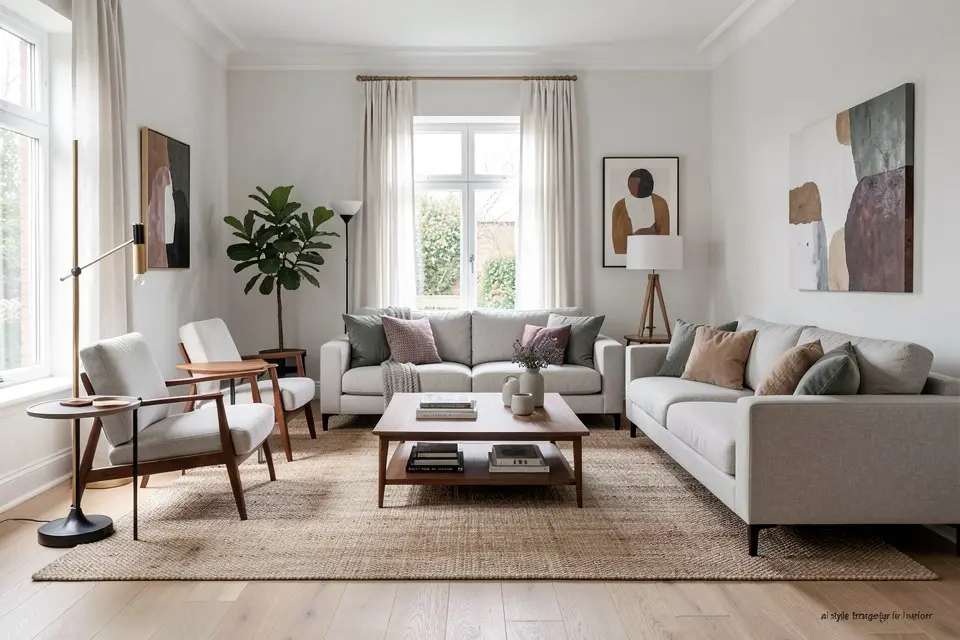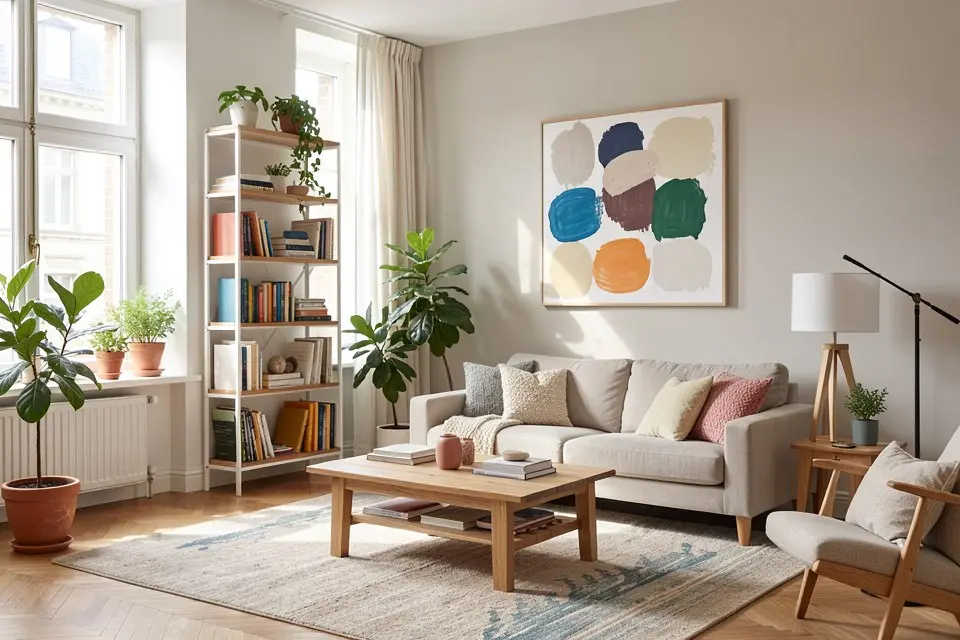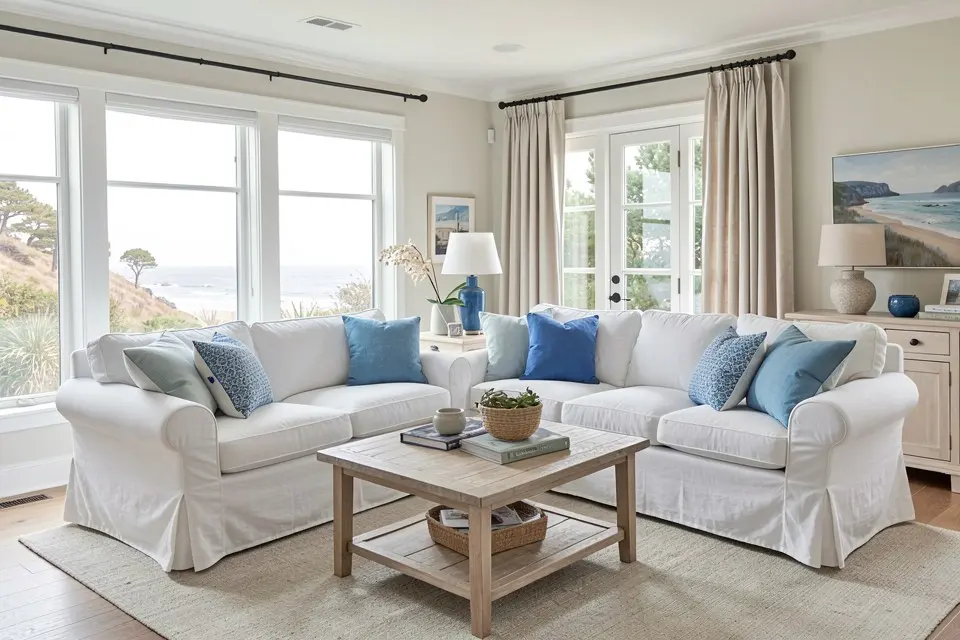
Scandinavian interior design is light wood, white walls, and heavy textile layering to counter the cold, not just white walls and a single grey sofa. Skip the textile layer and you get an empty showroom instead of a home built for long winters.
Why the style looks the way it does
Scandinavian design developed as a direct response to short winter days and long dark months: pale walls and light wood maximise what little daylight exists, and thick textiles, wool, sheepskin, knit throws, exist because the climate genuinely calls for them. The style’s famous restraint isn’t decoration for its own sake; it’s engineered for daylight, and its cosiness (the concept locals call hygge) is engineered for the dark months on either side. Both halves are load-bearing. Copy only the white-and-light-wood half and you end up with a room that photographs well and feels uncomfortable to actually live in.
The five markers
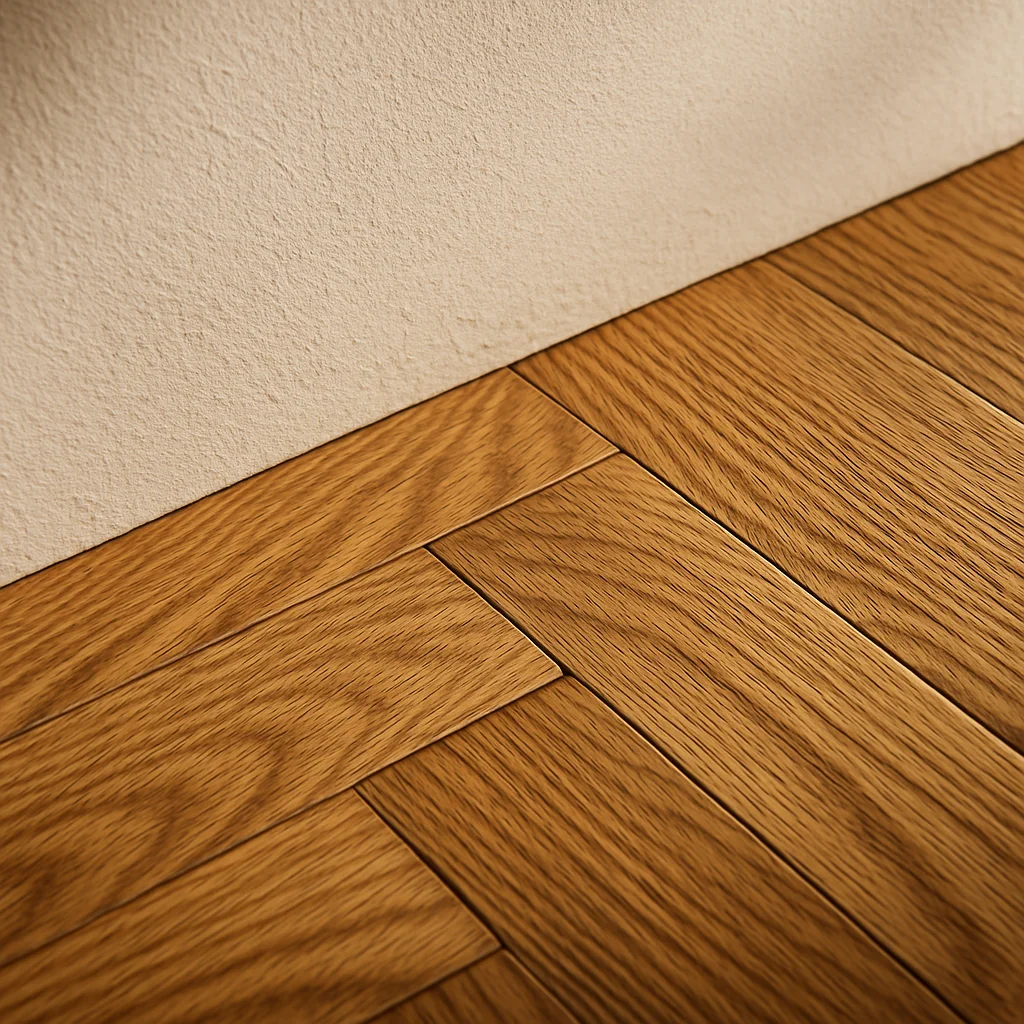
- Pale wood: ash, birch, or light oak, on floors, furniture legs, and shelving.
- White or near-white walls, sometimes with one wall in a very soft pastel, dusty blue or sage; accent wall ideas covers which wall should get it.
- Heavy textile layering: wool throws, sheepskin on chairs, knit cushions, layered rugs.
- Simple, functional furniture forms, clean lines, no heavy ornamentation, but not as stripped-back as pure minimalism.
- Candles and warm-toned lighting, used generously, especially in low-light seasons.
The palette
| Element | Colour |
|---|---|
| Walls | white or off-white, one optional pastel wall |
| Wood | pale ash, birch, or light oak |
| Textiles | cream, oatmeal, soft grey wool |
| Accent | one dusty pastel: blue, sage, or blush |
Where it goes wrong
The most common failure is stopping at furniture: light wood chairs and a white sofa with nothing textural layered on top. That’s the look without the function, and it reads cold rather than calm. Adding a wool throw, a sheepskin on one chair, and a couple of candles usually fixes it without touching the furniture at all.
The second failure is treating “Scandinavian” and “minimalist” as interchangeable and stripping the room too far. Scandinavian style tolerates, and needs, more visible textile and personal object than minimalist interior design does. A completely empty Scandinavian room is missing half the formula. Japandi is the halfway point if you want more restraint than this without going cold.
Room by room
- Living room: a light-wood-frame sofa with wool cushions, a sheepskin thrown over one chair, layered rugs, candles on the coffee table.
- Bedroom: a birch or ash bed frame, layered wool and linen bedding, a soft pastel accent wall. See bedroom redesign ideas for the layout side of getting a small bedroom to feel calm rather than cramped.
- Kitchen: white or pale wood cabinetry, open shelving with simple stoneware, a single pendant in a natural material.
- Home office: a light-wood desk, a wool-upholstered task chair, warm task lighting for darker months.
A worked example
A 3 × 3.6 m living room currently furnished with a dark brown leather sofa, no rug, and one overhead light.
The leather sofa is reupholstered or replaced with a light-wood-frame sofa in a cream or oatmeal fabric. A wool rug in a soft grey goes down, and a sheepskin throw goes over the reading chair. Two candle groupings and one warm-toned floor lamp replace reliance on the single overhead fixture. Total cost: €700 to €2,600 depending on whether the sofa is replaced or the leather one is kept and layered around, which is the cheaper route if the frame is otherwise in good shape.
Try it yourself
If your existing furniture leans dark and heavy, you don’t necessarily need to replace it, layering light textiles and a rug around it goes a long way, and it’s worth checking the numbers in furniture budget planning before deciding what to keep. To see the light-wood, layered-textile look on your actual room, run Style Transfer in Homie on a photo of the space. It keeps your layout and windows fixed and shows the palette and texture shift before you buy a sheepskin or a new rug.