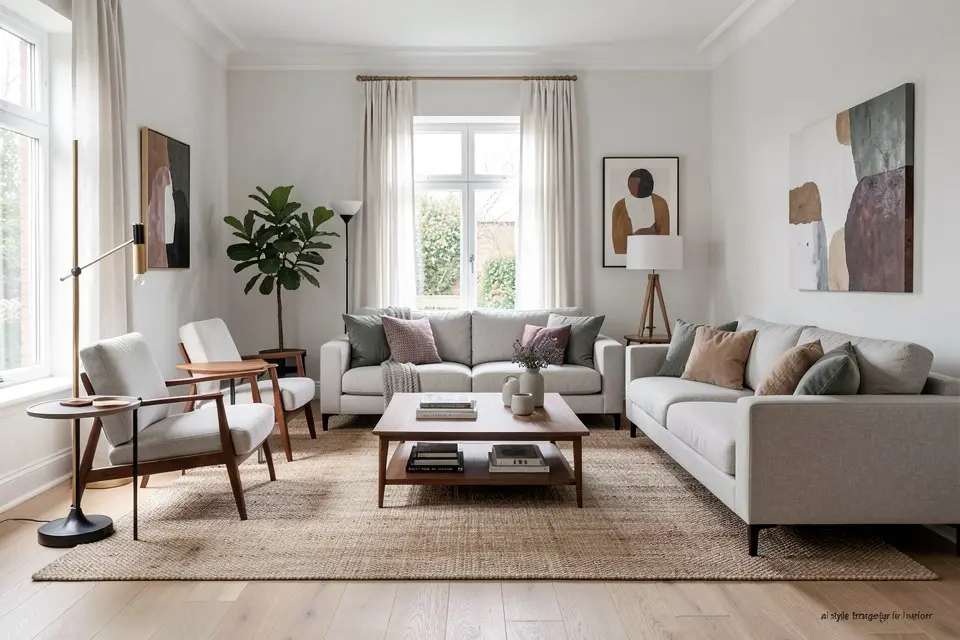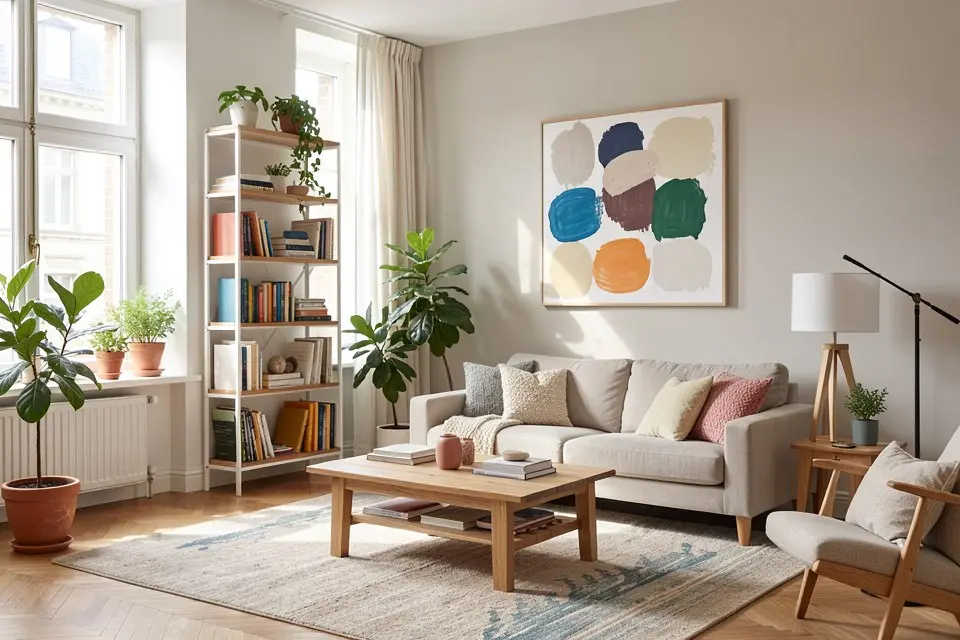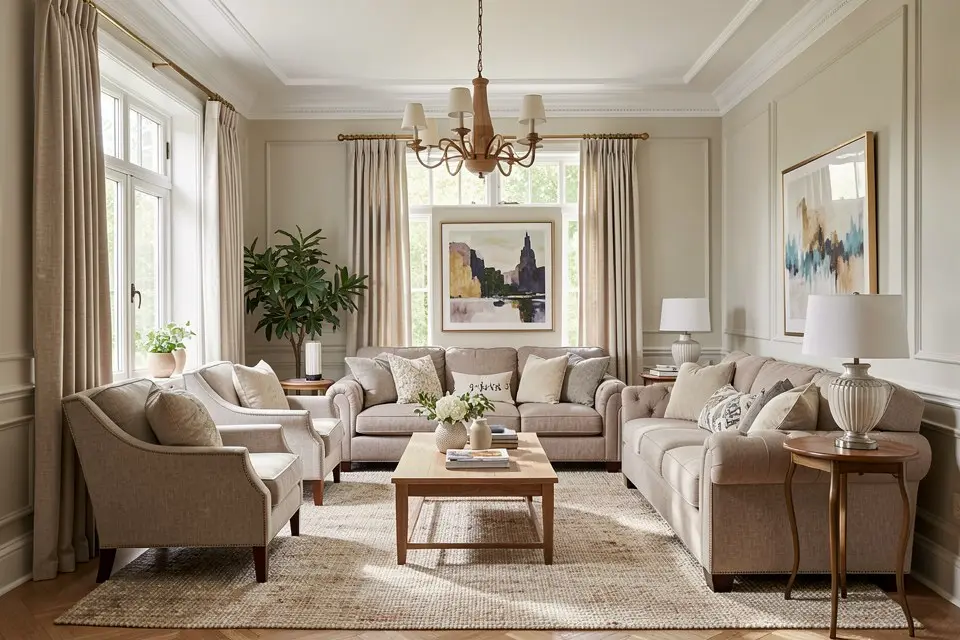
Transitional style is a deliberate 50/50 split between traditional and modern in the same room, not a vague neutral compromise between the two. The word “transitional” gets used as a synonym for “safe and beige,” but the good version has a clear pairing logic underneath it.
The actual mechanism
Transitional design works by pairing one traditional form with one modern counterpart in every category: a rolled-arm sofa (traditional) with a clean-lined glass or metal coffee table (modern), a turned-leg dining table (traditional) with simple upholstered chairs (modern), classic panel-and-crown moulding (traditional) with a minimal linear light fixture (modern). Each pairing keeps the room from tipping fully into either camp. Rooms that feel like “generic hotel neutral” usually skipped the pairing step and just bought neutral versions of everything instead of pairing opposites.
The five markers
- One traditional silhouette per room, a rolled arm, a turned leg, a wingback shape, kept to a single piece rather than repeated everywhere.
- One clean modern counterpart in the same room, a simple-lined table, an unadorned light fixture.
- A neutral base with one confident accent colour, not an entirely beige-on-beige palette.
- Texture as the main visual interest: a boucle, a linen weave, a textured rug, standing in for pattern.
- Classic architectural detail kept, but simplified: a simplified crown moulding, a plain panel instead of an ornate one.
The palette
| Element | Colour |
|---|---|
| Walls | warm greige, soft taupe, or off-white |
| Furniture | neutral upholstery with one textured piece |
| Accent | one confident colour: navy, deep green, or terracotta |
| Metal | brass or brushed nickel, kept consistent throughout |
Greige is the wall colour most often bought wrong, because its undertone flips between pink and green under different light; how to choose paint colours by undertone explains how to test it before buying.
Where it goes wrong
The most common failure is going fully neutral with no accent colour and no texture: beige walls, beige sofa, beige rug, beige curtains. That’s the “boring transitional” people complain about, and the fix isn’t complicated, one confident accent colour, used in a rug, an art piece, or a set of cushions, plus texture on the main upholstery instead of a flat weave.
The second failure is mixing traditional and modern without pairing them deliberately, an ornate carved table next to an ultra-minimalist sofa with nothing bridging the two reads as mismatched furniture rather than a cohesive style. The pairing needs to happen within each category (seating, tables, lighting), not just scattered across the room. If you’re deciding between committing fully to one direction instead, it’s worth comparing against a clearer single-lane choice like mid century modern or farmhouse, both of which have less ambiguity built in.
Room by room
- Living room: a rolled-arm sofa in a textured neutral fabric, a clean-lined glass or wood coffee table, one navy or terracotta accent chair. The seating-triangle rules in living room redesign ideas decide where that chair goes.
- Dining room: a turned-leg table with simple upholstered chairs, a modern linear pendant, a traditional-shape rug in a simplified pattern.
- Bedroom: an upholstered headboard with a classic shape, simple modern nightstands, a textured neutral bedspread with one accent-colour throw. See bedroom redesign ideas for the layout considerations that sit underneath any style choice.
- Home office: a traditional-shape desk (turned or fluted legs) paired with a modern ergonomic task chair and simple open shelving.
A worked example
A 3.6 × 4.4 m living room currently mismatched: a traditional wingback sofa the owner inherited, next to a very modern chrome-and-glass side table that doesn’t relate to it at all.
Rather than replacing the wingback sofa, it gets reupholstered in a textured neutral boucle, keeping the traditional silhouette but modernising the surface. The chrome side table is swapped for a simple wood one with straight legs, which relates better to both eras. A navy accent chair is added opposite the sofa, and a simplified geometric rug ties the two furniture styles together underneath. Total cost: €1,200 to €3,200, with reupholstery as the largest single line item.
Try it yourself
If you’re deciding whether to reupholster an inherited piece or replace it, that decision is usually cheaper to test than it feels, and the general phased-decision approach in DIY vs hiring a contractor applies just as well to furniture calls as to renovation ones. To see the traditional-modern pairing on your own living room, run Style Transfer in Homie on a photo of the space. It keeps your existing layout intact and shows the paired furniture and accent colour before you commit to reupholstering anything.