Stage the rooms buyers see first, do the removing before the adding, and photograph within two days of finishing. Most sellers get this backwards: they buy cushions for the spare room and leave the hallway full of shoes. The checklist below is ordered by what returns the most per hour, and in most homes the first four sections are 80 percent of the result.
The order, and why
Listing portals show the first five photos before anyone scrolls. In most listings that is an exterior, the living room, the kitchen, the main bedroom and one bathroom. Those rooms decide the click-through; everything else decides the viewing. So the effort goes:
- Entrance and hallway (it is in every viewing, and in the first exterior photo)
- Living room
- Kitchen
- Main bedroom
- Main bathroom
- Everything else, in the order buyers walk
The single rule across all of them: remove first, add second. Removal is free and does most of the work. Additions cost money and only work in a room that has already been emptied of noise.
Entrance and hallway
Remove: every coat, every shoe, the umbrella stand, any mat with a word on it, the key bowl, the mirror if it faces the door.
Add: one plain mat, one light that is switched on for every viewing, one hook rail with nothing on it.
Time: 1 hour. Cost: €0–€40. This is the highest-ROI hour in the house; buyers form their opinion in the first 8–10 seconds and the hallway is all they have seen.
Living room
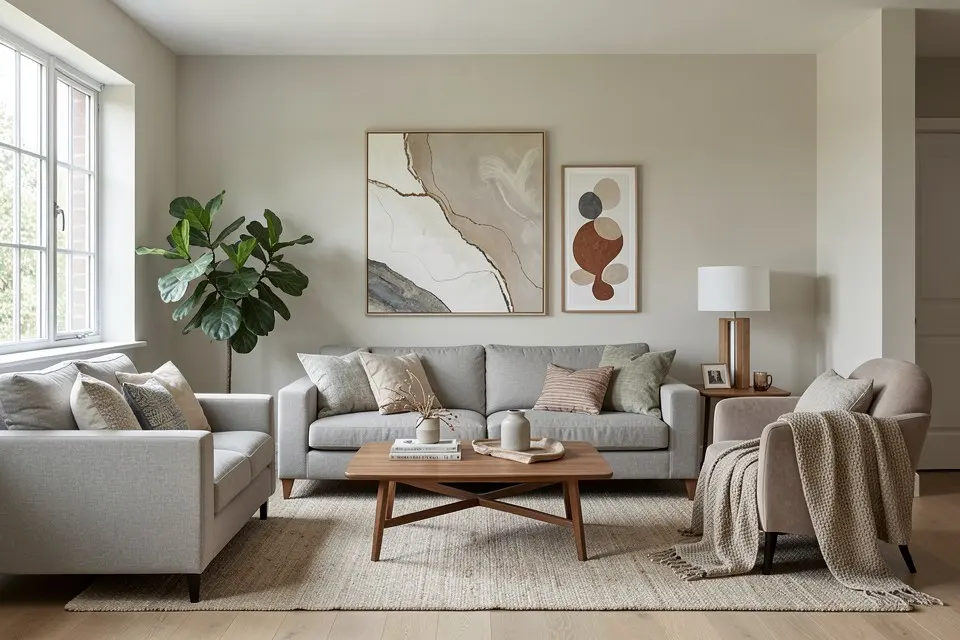
Remove: half the furniture. Seriously: in most living rooms one sofa, one chair and one table are the whole set. Take out the second side table, the magazine rack, the extra armchair, the TV stand clutter, all family photos, and anything on the floor that is not a rug. Take the TV off the wall if it leaves the room feeling bigger than the patch it leaves.
Add: two cushions in one colour, one throw, one plant over 60 cm tall, one large piece of art, and a lamp on at every viewing. Pull the sofa 20–40 cm off the wall if the room allows.
Time: 3–4 hours. Cost: €60–€250. The layout rules in small living room layout ideas are the staging rules too: a walkable 90 cm path through the room and no furniture touching the door swing.
Kitchen
Remove: everything from the worktop except a kettle and one board. Fridge magnets, tea towels on the oven, bins in view, the drying rack, the spice rack, all of it.
Add: a bowl of one type of fruit, one plant, new cupboard handles if the existing ones are dated (€40–€150 for a full run, 2 hours). Degrease the extractor and re-seal the sink silicone if it is grey — buyers read a grey seal as “neglected” at a glance.
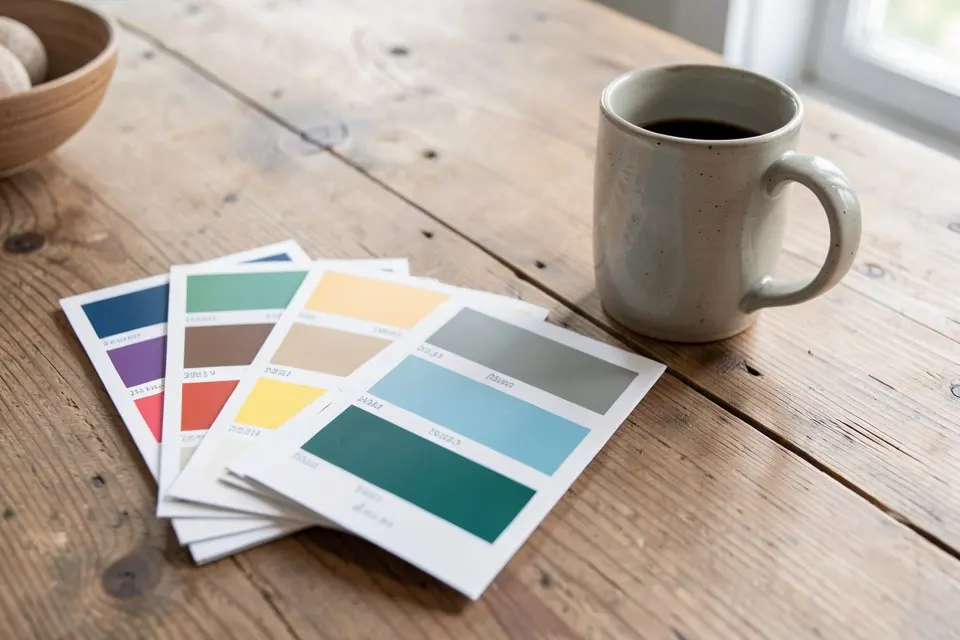
Time: 3 hours plus 2 for handles. Cost: €20–€200. A cabinet repaint is worth it only if the doors are visibly worn and you have 4–5 days; the numbers are in kitchen cabinet colour ideas, and in most sales the handle swap gets 70 percent of the effect for 5 percent of the cost.
Main bedroom and bathroom
Bedroom
Remove: everything on the bedside tables except a lamp, all clothes, the laundry basket, the exercise bike, anything under the bed that shows.
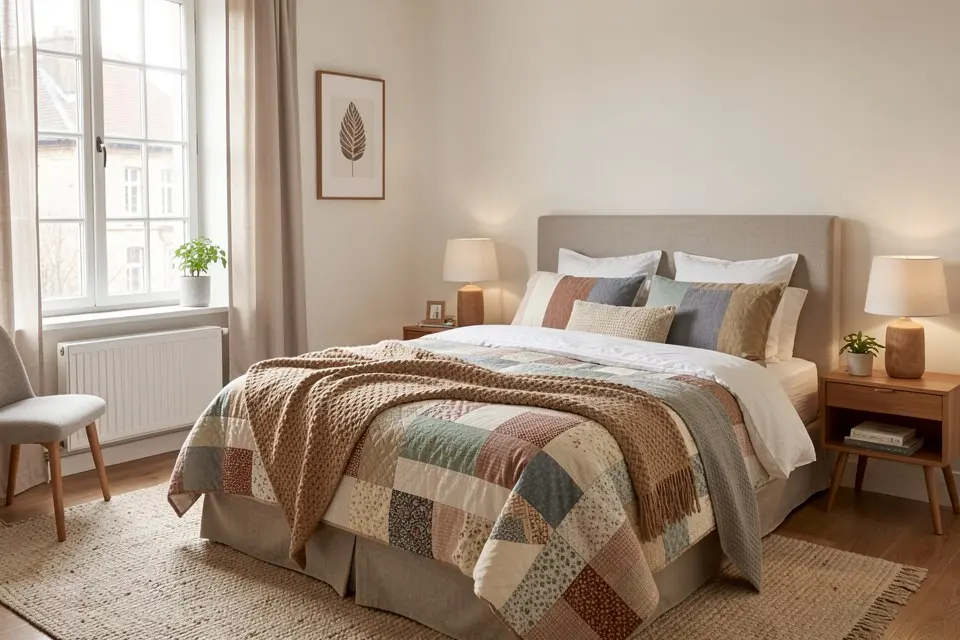
Add: white or off-white bedding pressed and turned down, two matching lamps, one artwork over the bed. Hang curtains as high as the rod allows.
Time: 2 hours. Cost: €80–€200. Bedding is the one place I would spend on new: a €60 white duvet cover photographs like €600 in a well-lit room. A bedroom in a dated colour is worth repainting only in a pale neutral — bedroom colour ideas explains why one colour on every surface is the size trick, and it is the staging trick too.
Bathroom
Remove: every bottle, the toilet brush, the bath mat, the toothbrushes, the shower curtain if it is not plain white.
Add: two folded white towels, one plant that tolerates humidity, a new plain white shower curtain (€15). Re-grout or grout-pen the shower tiles: €10 and 45 minutes, and it is the difference between “clean” and “renovated” in a photo.
Time: 2 hours. Cost: €30–€80.
Everything else
- Second bedrooms: stage as bedrooms, never as storage. If a room has become a dumping ground, empty it and put a bed in it, even a borrowed one. A room with no purpose is a room the buyer cannot price.
- Home office: one desk, one chair, one lamp, cables hidden. Nothing on the desk.
- Kids’ rooms: two-thirds of the toys into boxes in the garage. Keep the bed and one shelf of books.
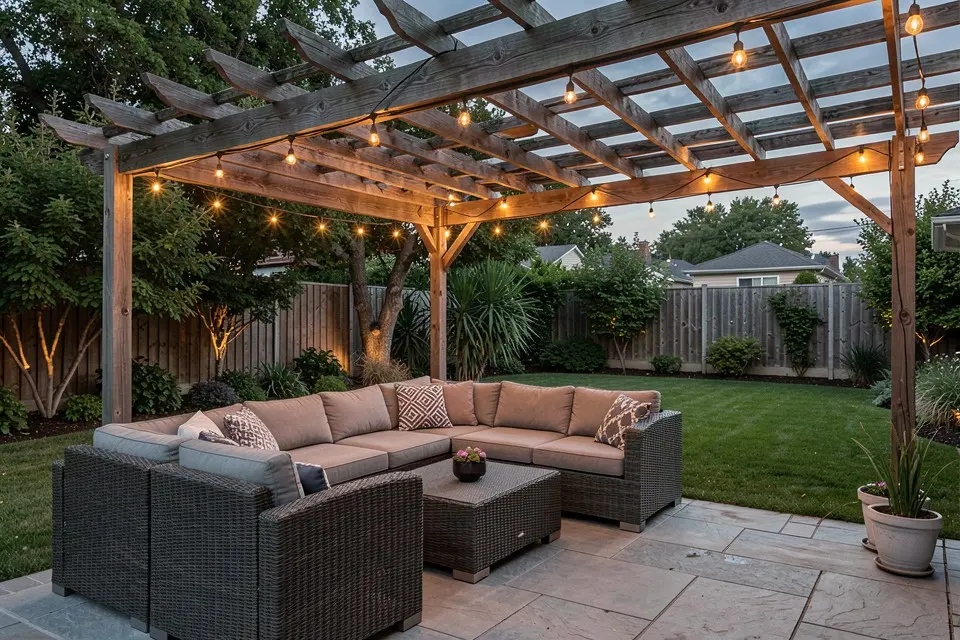
- Outside: bins out of sight, a swept path, a pot at the door. The rest of the exterior list is in the exterior checklist before selling.
Timing before photos
| Days before shoot | Do |
|---|---|
| 14 | Book the photographer. Order anything you are buying. |
| 10 | Removal in every room. Boxes to garage, storage or a friend’s. |
| 7 | Repairs: grout, silicone, handles, touch-up paint. |
| 3 | Additions: bedding, cushions, towels, plants. |
| 1 | Deep clean. Windows inside and out. |
| 0 | All lights on, blinds open, doors open, 30 minutes before the photographer arrives. |
Do not stage more than 10 days before the shoot; a lived-in house drifts back. And do not let anyone photograph on the day of the deep clean — surfaces are still streaky and the cleaner’s kit is in the frame.
The photographer’s side of the same day — lens, time of day, which rooms to shoot from the door — is in listing photo tips for sellers.
When virtual staging replaces physical staging
Physical staging makes sense when the home will be shown furnished and the price supports it: typically €1,500–€4,000 per month for a furnished three-bedroom, or €300–€900 for a consultation plus your own furniture. Below roughly €300,000 sale price, or for any home that will be empty at viewing, the arithmetic rarely works.
Virtual staging fills the gap: €15–€80 per photo, ready in a day or two, and it needs an empty or nearly empty room to look honest. Use it for empty rooms, for rooms you cannot afford to furnish, and for showing a second bedroom as an office in one photo and a nursery in another. Do not use it to hide defects, and label it as virtual in the listing.
The full cost comparison, including where each one fails, is in how virtual staging compares to physical staging. If the house is already empty, photograph each room from the doorway with the floor in frame and run it through Virtual Staging in Homie; it returns the furnished view, a furniture list you can actually buy if a viewer asks, and the result is ready before the listing goes live.
The one-page version. 1. Hallway: empty it. 2. Living room: half the furniture out, one lamp on. 3. Kitchen: clear worktops, swap handles. 4. Bedroom: white bedding, two lamps. 5. Bathroom: towels, grout pen, plain curtain. 6. Every other room gets a purpose. 7. Photograph within 48 hours. 8. Empty rooms get staged virtually, not left empty.