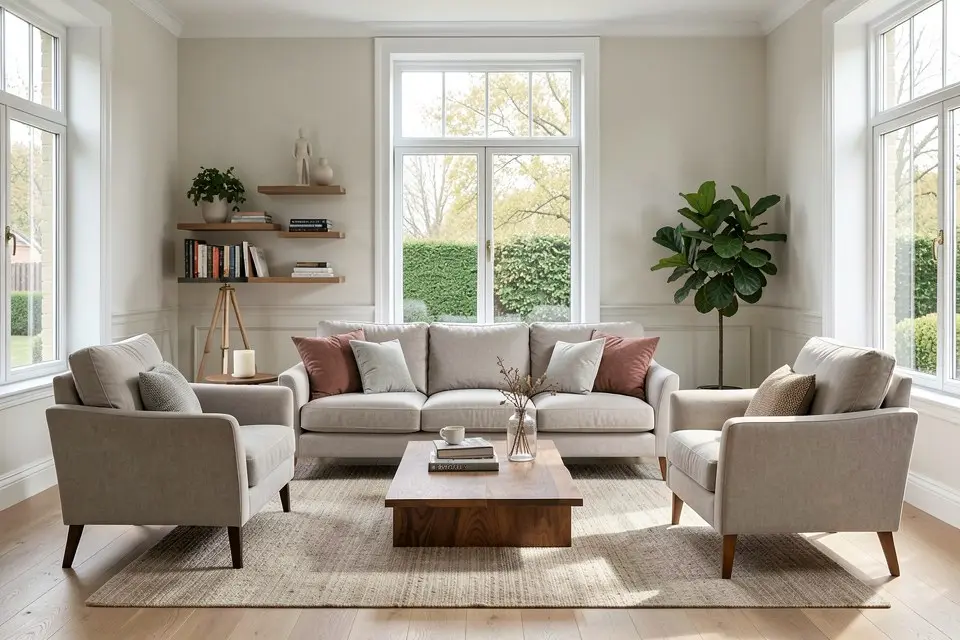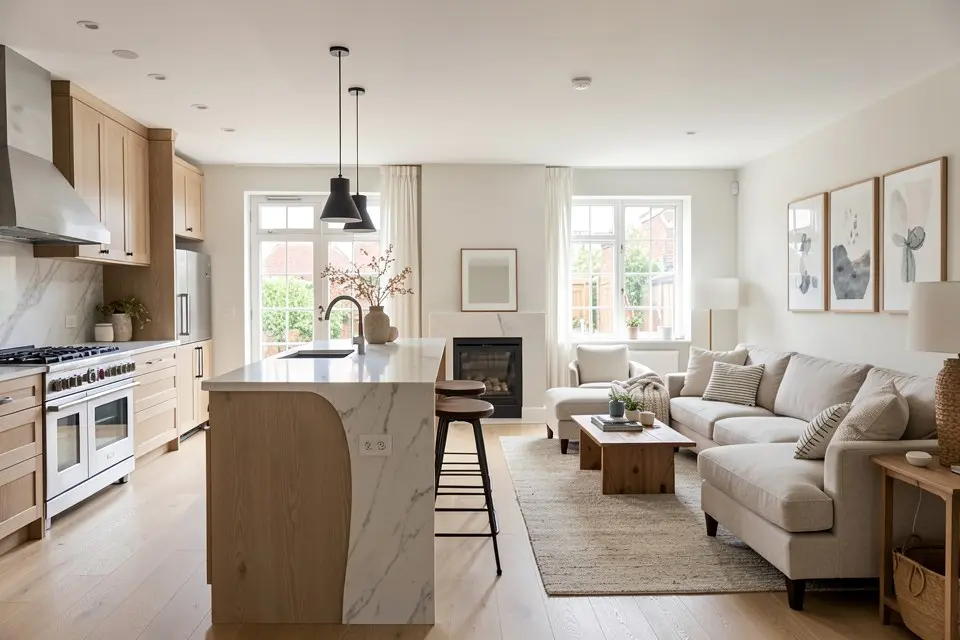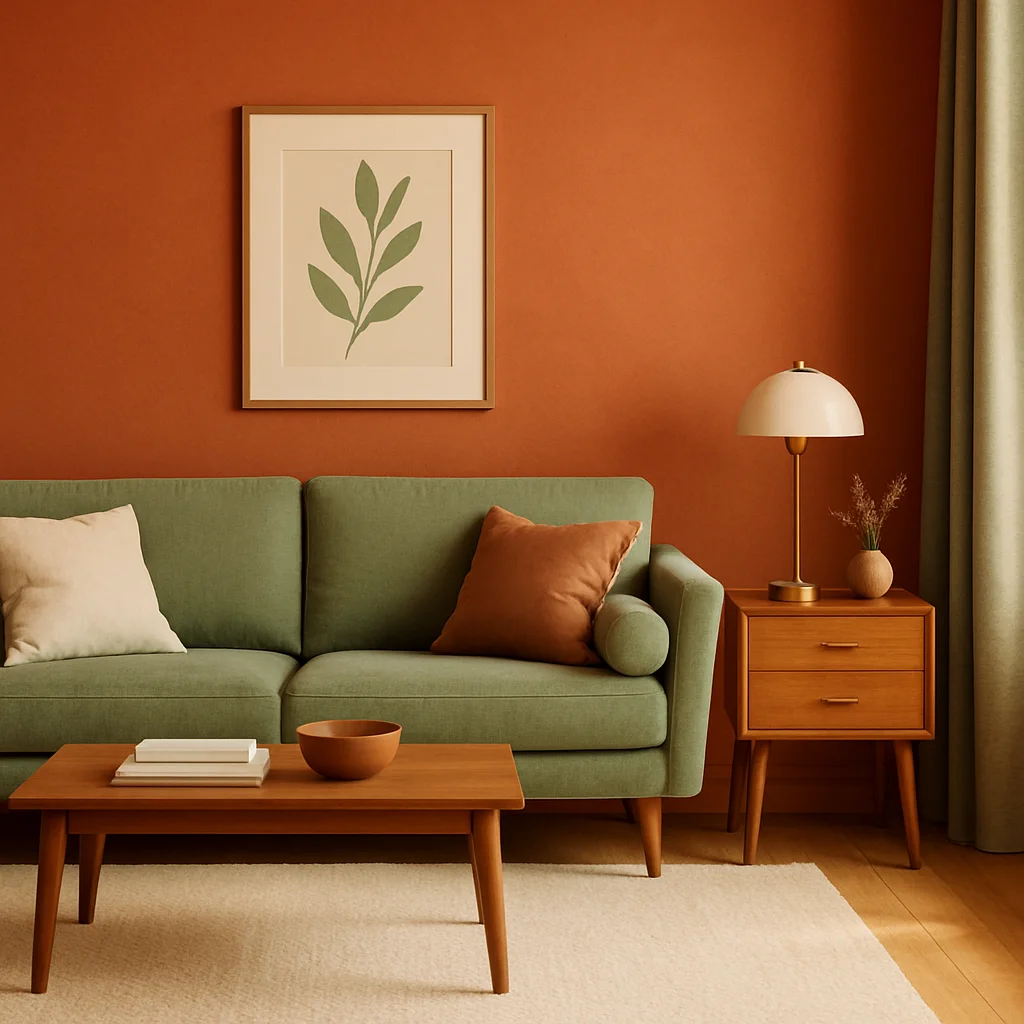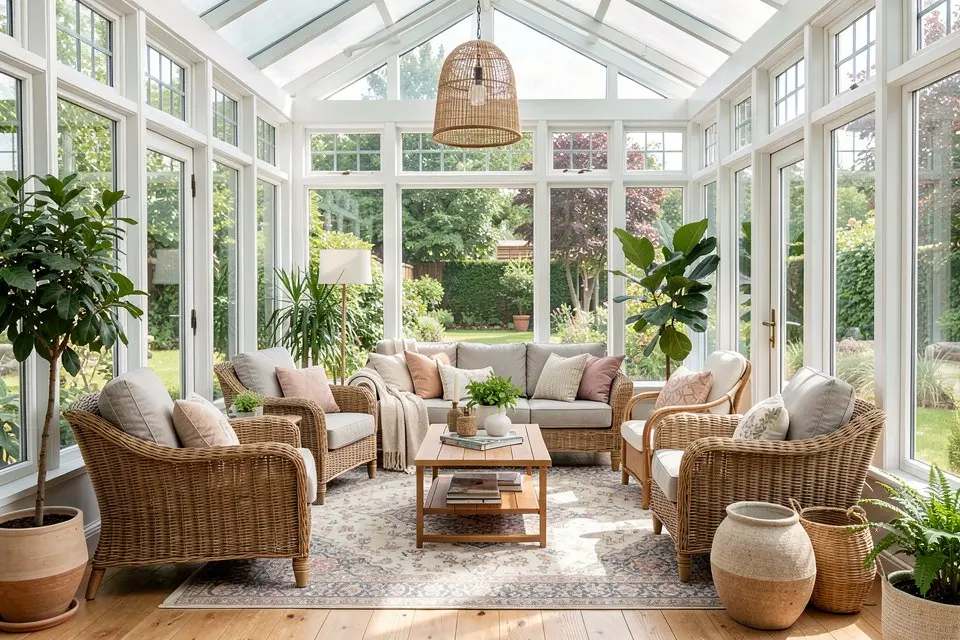
A sunroom is the brightest room in the house and, because of that, the hardest one to furnish well. Too much light fades fabrics, heats the room in summer and makes screens unreadable. The sunroom ideas below start from those practical problems and then look at how to shape the room around what you actually want to do in it.
Decide what the room is for
Most sunrooms end up as a pass-through with two chairs nobody sits in. Give the room one main job:
- Reading or morning coffee: two comfortable chairs, a side table, a lamp for evening.
- Casual dining: a round table for four, which fits better than a rectangle in most sunrooms and keeps walkways open.
- Plant room: shelving at several heights, a waterproof floor and a potting bench.
- Second living room: a sofa facing the view, with a coffee table and a rug.
Once the job is clear, the layout follows. The living room redesign ideas apply if you are treating the sunroom as an extra living space.
Furniture that survives the sun
Frames
All-weather wicker (resin), teak, powder-coated aluminum and painted wood all tolerate a bright, sometimes humid room. Natural rattan looks great but can dry out and crack in a room that gets very hot.
Fabrics
Choose performance fabrics made for outdoor use or solution-dyed acrylic. They resist fading and moisture. Lighter colors fade less visibly than saturated ones. Rotate cushions occasionally so they wear evenly.
Rugs
An indoor-outdoor rug in polypropylene handles sun, spills and plant water. Natural jute is a good look but stains with water. The rug size guide helps you pick a size that anchors the seating without covering the whole floor.
Controlling heat and glare
Window treatments
Sunrooms need shades that filter rather than block light, or the room loses its purpose.
- Solar shades cut glare and heat while keeping the view.
- Cellular shades add insulation for cold months.
- Top-down, bottom-up shades let light in above eye level and give privacy below.
Air movement
A ceiling fan is the single most useful fixture in a sunroom. If the room gets very hot, a ductless mini-split heats and cools it without extending the house ductwork.
Window film
Low-E window film reduces solar heat and UV. It is a good option when replacing glass is not in the budget.
Style ideas that suit a sunroom
A bright room works with almost any style, but some feel natural:
- Coastal: white or pale blue walls, woven textures and linen-look fabrics. See the coastal style guide.
- Bohemian: layered textiles, a lot of plants and mixed patterns. The bohemian style guide explains how to layer without clutter.
- Scandinavian: pale wood, white walls and simple forms that let the light do the work.
- Traditional garden room: painted wicker, floral fabric and a tiled floor.
Plants
Sunrooms are ideal for plants, but not every plant wants full sun all day. Put sun-loving plants such as citrus, succulents and bird of paradise close to south-facing glass, and ferns or pothos further back. Group pots on trays to protect the floor, and use a mix of heights — floor pots, a plant stand and hanging planters — so the room feels lush rather than cluttered.
Lighting for the evening
A sunroom without lamps is dark and unused after sunset. Add at least two lamps at seating height and dimmable overhead lighting. Warm bulbs around 2700K keep the room cozy at night and stop the windows from turning into black mirrors with harsh reflections.
Try the look before you shop
Sunrooms are expensive to furnish because of the special fabrics, so it pays to test ideas first. Photograph the room from the doorway on a bright day and upload it to Homie’s room redesign tool. Try a coastal version, then a boho plant room. If you have a photo of a sunroom you love, the style transfer tool applies that look to your own space. Once a render feels right, the shop the look guide explains how to find similar pieces.
Budget snapshot
| Upgrade | Typical US cost |
|---|---|
| Solar or cellular shades, per window | $80–$400 |
| Ceiling fan, installed | $250–$800 |
| Indoor-outdoor rug, 8×10 ft | $150–$600 |
| All-weather seating set | $600–$3,000 |
| Ductless mini-split, installed | $3,000–$6,000 |
Floors that handle sun and water
Sunroom floors see direct sun, temperature swings and sometimes water from plants or wet feet coming in from the garden. Porcelain tile, sealed stone and luxury vinyl plank all cope well. Hardwood can fade and move with humidity, so protect it with rugs and UV-filtering shades. In a three-season room, tile is the safest choice because it tolerates cold without cracking or gapping.
Layouts and dimensions
Sunrooms are often long and narrow, which makes furniture placement tricky. A few numbers help:
- Walkway: leave about 30 to 36 inches between furniture and the door you use to reach the garden or patio.
- Conversation group: keep seats within 8 to 10 feet of each other so people can talk without raising their voices.
- Coffee table: place it 14 to 18 inches from the sofa edge.
- Dining: a 42-inch round table seats four and needs about 36 inches of clearance all around to pull chairs out.
- Reading chair: set it at a right angle to the main window rather than facing it, so the light falls across the page instead of into your eyes.
In a long room, split the space into two zones, such as seating at one end and a small table or plant bench at the other, instead of lining everything up along the windows.
Three-season vs four-season rooms
| Three-season | Four-season | |
|---|---|---|
| Walls and roof | Often uninsulated | Insulated like the house |
| Glass | Single pane or screens | Double-glazed, often low-E |
| Heating and cooling | Usually none | Tied into HVAC or a mini-split |
| Best furniture | Outdoor-rated pieces | Indoor furniture with fade-resistant fabric |
| Best floor | Tile or sealed concrete | Tile, vinyl plank or engineered wood |
Knowing which type you have tells you whether to shop in the outdoor aisle or the living room aisle, and avoids buying indoor upholstery for a room that freezes in January.
Mistakes to avoid
- Dark, heavy furniture. It absorbs heat and makes a glass room feel crowded.
- Leaving windows bare. Even if you love the view, shades on the hottest walls protect furniture and floors.
- Pushing everything against the glass. Floating seating a little way off the windows keeps paths clear and cuts glare on screens.
- Too many small plants. A few large ones make a stronger statement and are easier to water.
Try it in Homie
- Take a photo from the doorway into the house, so the windows are in frame.
- Upload it to the room redesign tool and describe the use, such as “reading room with two lounge chairs and large plants.”
- Compare two styles side by side, then pick fabrics in fade-resistant materials that match the render you prefer.
Seasonal care that keeps the room usable
A sunroom asks for a little more upkeep than an interior room. In spring, wash the glass inside and out and check window seals for gaps or condensation between panes, which usually means a failed seal. Before summer, lower shades on the hottest walls during the day and rotate cushions so they fade evenly. In fall, bring outdoor-rated pieces’ cushions inside if the room is unheated, and move tender plants closer to the house wall where it stays warmer at night. In winter, run a small dehumidifier if you notice condensation on the glass; damp air can mark wood frames and encourage mildew on fabric.