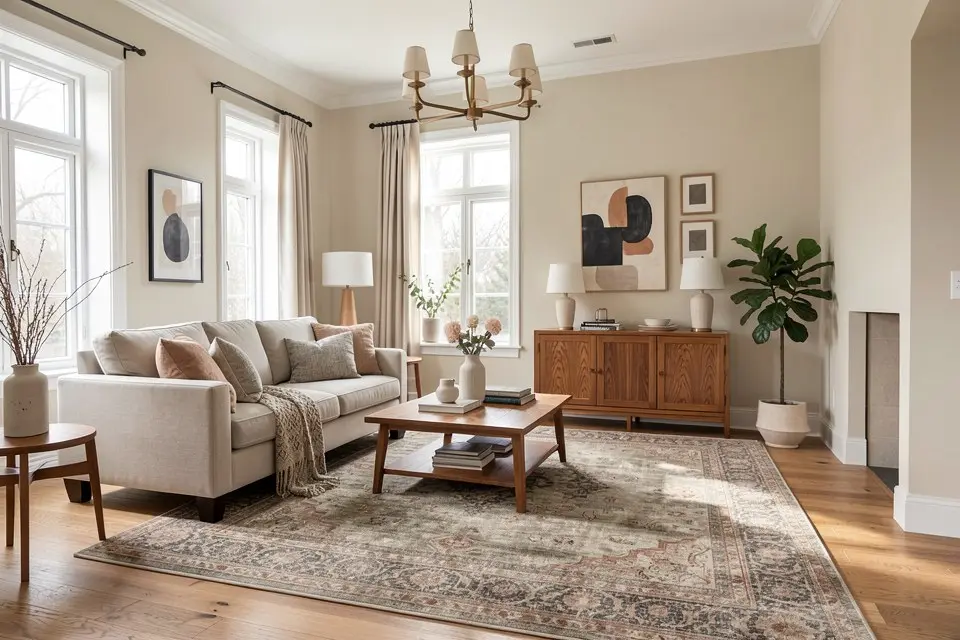
The right rug size is almost always one size bigger than the one people buy. A rug should anchor the furniture that belongs together, which means the front legs of the sofa and chairs sit on it in a living room, the lower two-thirds of the bed sits on it in a bedroom, and the chairs stay on it when pulled out at the dining table. A rug that sits alone in the middle of the floor, touching nothing, makes the room look smaller and the furniture look scattered.
The standard sizes, and what they are for
European rugs mostly come in a handful of sizes. Knowing what each one is for saves most of the guessing.
| Size (cm) | Area | Best use |
|---|---|---|
| 60 × 90 / 70 × 140 | under 1 m² | Doorways, bathrooms, beside a bed |
| 80 × 250 / 80 × 300 | 2–2.4 m² | Hallways and runners, beside a long bed side |
| 120 × 170 | 2 m² | Reading corner, under a small round table, kids’ play area |
| 160 × 230 | 3.7 m² | Small living rooms, under a 140 cm bed, compact dining sets |
| 200 × 300 | 6 m² | Most living rooms, under a 160 cm bed, dining tables for 6 |
| 240 × 340 / 250 × 350 | 8–8.75 m² | Large living rooms, king beds, dining tables for 8 |
| 300 × 400 | 12 m² | Open-plan zones and big rooms |
Round rugs follow the same logic: 160 cm for a small table or a nursery, 200–240 cm for a round dining table seating four to six.
The living room: front legs on
There are three ways to place a rug in a seating area. One is almost always right.
- All legs on. Every piece of furniture sits fully on the rug. This needs a large rug, usually 240 × 340 cm or more, and a large room. It looks generous and works best in open-plan spaces where the rug defines the zone.
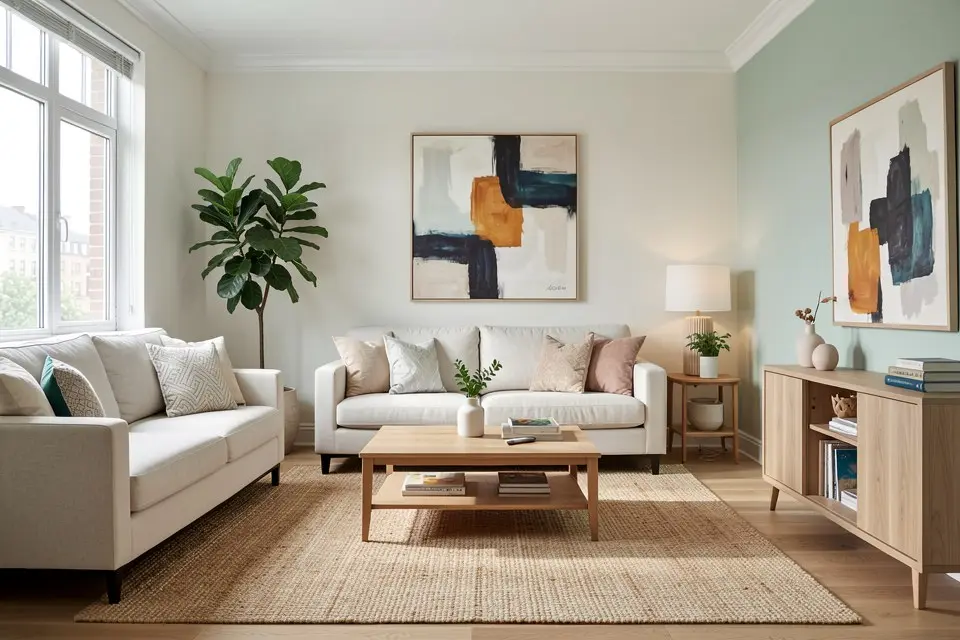
- Front legs on. The front legs of the sofa and armchairs sit on the rug; the back legs stay on the floor. This is the rule for most living rooms and usually means 200 × 300 cm. It ties the group together without needing a room-sized rug.
- No legs on. Only the coffee table sits on the rug. This only works in very small rooms with a 120 × 170 cm rug, and even then it tends to look like a bath mat that wandered in.
A useful check: the rug should be at least 15–20 cm wider than the sofa on each side. A 220 cm sofa needs a rug at least 250–260 cm wide, which is why a 160 × 230 cm rug under a three-seater almost always looks short.
If you are still deciding where the sofa goes, sort that first. The furniture layout sets the rug, not the other way round; small living room layout ideas covers the common arrangements.
The bedroom: two-thirds under the bed
Place the rug sideways, perpendicular to the bed, starting 20–40 cm in front of the bedside tables so the tables stay on bare floor. It should show 50–70 cm on each side of the bed, so your feet land on it when you get up, and extend 50–90 cm beyond the foot of the bed.
| Bed width | Minimum rug | Better |
|---|---|---|
| 90–120 cm | 120 × 170 cm | 160 × 230 cm |
| 140 cm | 160 × 230 cm | 200 × 300 cm |
| 160 cm | 200 × 300 cm | 240 × 340 cm |
| 180 cm+ | 240 × 340 cm | 250 × 350 cm |
If the budget will not stretch to a large rug, two runners of 80 × 250 cm, one on each side of the bed, do the job for less. The ideas in bedroom redesign ideas use this trick often in rentals.
The dining room: chairs stay on when pulled out
Measure the table and add 60–75 cm on every side. That is the space a chair needs to be pulled back and sat on without the back legs catching the rug edge.
- A 90 × 160 cm table for six needs about 210 × 300 cm, so 200 × 300 cm works.
- A 100 × 220 cm table for eight needs 240 × 340 cm.
- A 120 cm round table needs a 240 cm round rug.
Pick a flat weave or a short pile under 1 cm in a dining room. Chairs drag, crumbs fall, and a high-pile rug turns every meal into a small wrestling match.
Distance from the walls
In a living room or bedroom, leave 30–60 cm of bare floor between the rug and the walls. In a narrow room, keep the gaps roughly equal on opposite sides; a rug pushed against one wall looks like it slid there. In a small room, 20 cm is the minimum; any closer and it reads as fitted carpet that was cut short.
Runners in hallways should leave 10–15 cm of floor on each side and stop 30–45 cm short of each end.
Measure with tape before you buy
The most reliable test costs nothing. Mark the rug’s outline on the floor with painter’s tape and leave it for a day. Walk around it, sit on the sofa, open the doors. Doors are the thing people forget: a rug under a door swing needs a pile low enough for the door to clear, usually under 1.5 cm.
You can also see a size before committing. A photo of the room run through Homie’s Room Redesign with the rug described (“200 × 300 cm jute rug, front legs of sofa on it”) gives a quick sense of proportion, and it is easier to compare two sizes that way than to return a rug.
What each size costs
Prices vary most with material, not size. Rough ranges in Europe:
| Material | 160 × 230 cm | 200 × 300 cm | 240 × 340 cm |
|---|---|---|---|
| Synthetic (polypropylene) | €60–€180 | €100–€300 | €180–€450 |
| Jute or sisal | €120–€300 | €200–€500 | €350–€800 |
| Machine-made wool | €250–€600 | €400–€1,000 | €650–€1,500 |
| Hand-knotted or hand-tufted wool | €600–€2,000 | €1,000–€3,500 | €1,600–€5,000 |
A good rug pad adds €30–€90 and stops the rug creeping, protects the floor and makes a thin rug feel twice as thick. If the rug is one line in a wider refresh, it belongs in the furniture budget plan alongside the sofa, not as an afterthought bought with what is left over.
Common mistakes
- Buying the rug before the furniture. The sofa and bed decide the size.
- Too small, again. If in doubt between two sizes, the larger one is right in about nine rooms out of ten.
- A rug under only the coffee table. It splits the seating group instead of joining it.
- Several small rugs in one room. Three rugs look like three islands. One large rug, or one per clearly separate zone in an open-plan room.
- Ignoring pile height near doors. Check the door clearance before ordering.
A worked example
A 4 × 5.2 m living room with a 230 cm three-seater against the long wall, two armchairs opposite and a coffee table between. The owners had a 160 × 230 cm rug, which stopped 25 cm short of the sofa and left the armchairs floating.
The replacement is a 200 × 300 cm flat-weave wool rug placed lengthways along the sofa. The sofa’s front legs sit 20 cm onto the rug, the armchairs’ front legs sit on the far edge, and the rug is 35 cm wider than the sofa on each end. Bare floor shows 50 cm from the side walls. Cost: €520 for the rug and €45 for a pad. Nothing else changed, but the seating group now reads as one room instead of four pieces of furniture standing near each other.